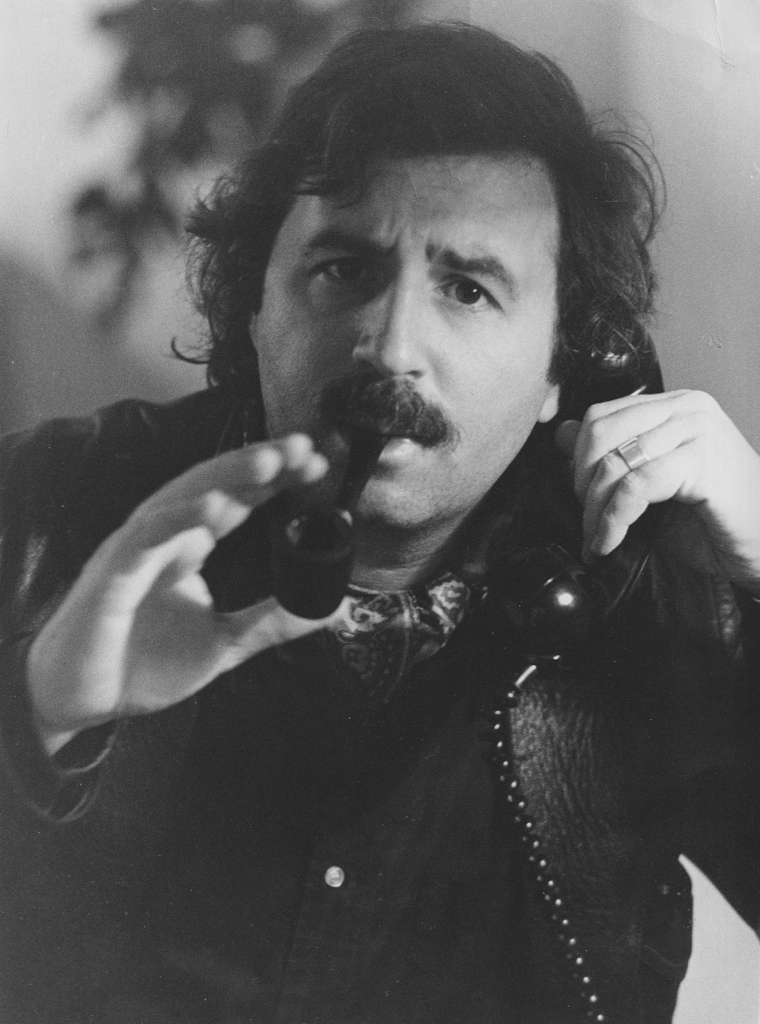
The blue stripes of Bank Leumi, the Kupat Holim logo, and the iconic red-yellow mailboxes have become inseparable from Israel’s visual culture. They seem to have always existed—ubiquitous and unquestioned. But behind these designs, as well as many other key public design projects, stood a single figure who brought a forward-thinking modernist design philosophy from the Netherlands to Israel. This philosophy was rooted in the Bauhaus, De Stijl, and Swiss typography traditions. That designer was Eli Gross.
Eli Gross was born in Haifa 1939 during the British Mandate in Palestine. In 1962, he began his studies at the Royal Academy of Art (KABK) in the Hague, which sparked a lifelong career in graphic design, crossing culture, borders and mediums. Eli studied at the Graphic and Typographic Design Department under notable teachers such as Ootje Oxenaar, Jan van Keulen, Miss W. van Blaaderen, Piet van Tricht, Jacques Jansen, and Gerrit Noordzij.1
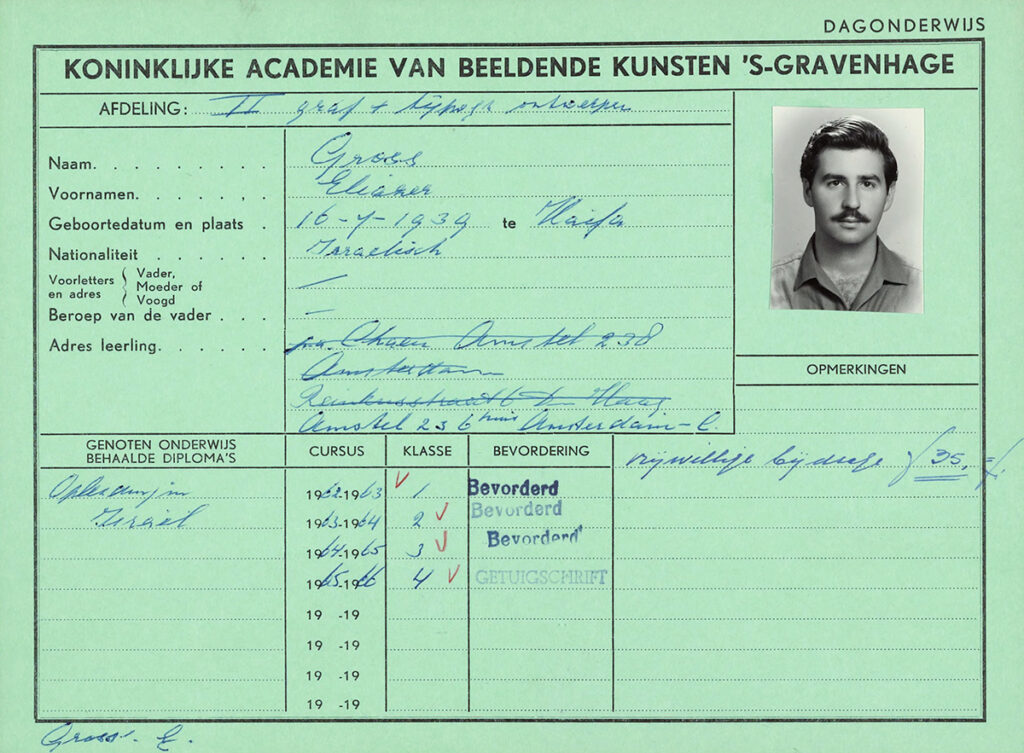
Eli student admission files, Source: The Hague City Archives, 0058-01 Academie van Beeldende Kunsten, inventory number 1109.
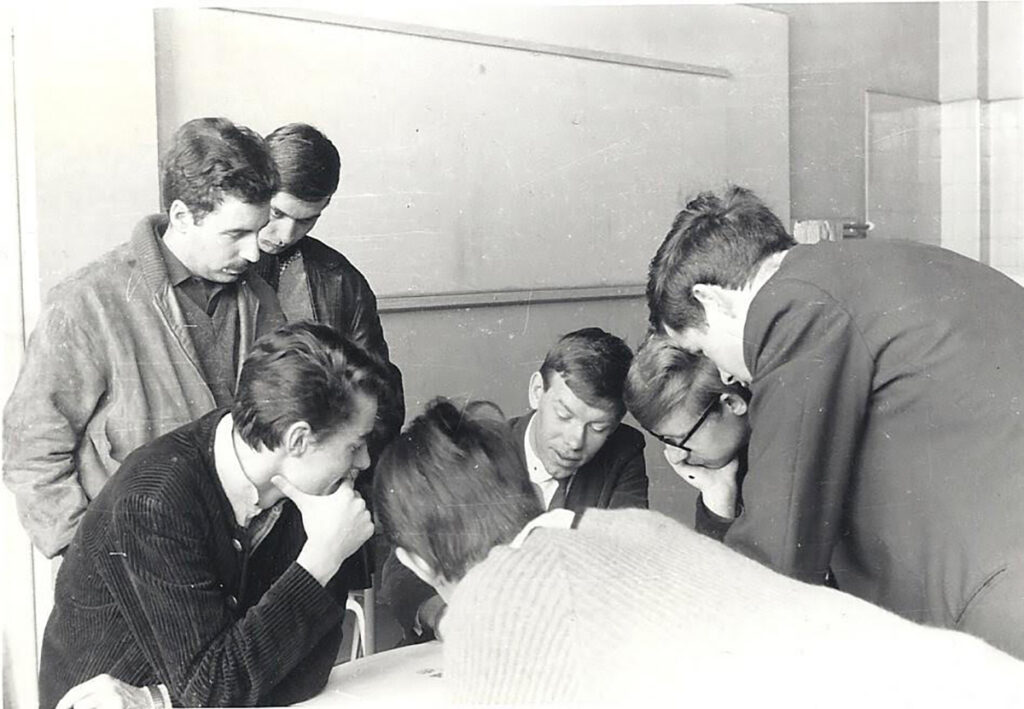
Lessons in lettering and design at the KABK’s Graphic & Typographic Design Department II daytime course in 1962, taught by Gerrit Noordzij. From left to right: Eli Gross, Rudo Hartman, Gerrit Noordzij, Frans Bouwman, Eugene Hoekstra. At front left: Jelle van der Toorn Vrijthoff. Seen from behind: Marcel Hinze. Photo: Jaap Andela.
Although the academy at that time was still strongly shaped by the Bauhaus spirit, new ideas and approaches began to enter—most notably through Ootje Oxenaar, who stood out from the typical teachers of the period.
As Jos Tigges, a former student recalls: “Oxenaar brought a new vision to design, based on a very pictorial approach. This was a revolution, because the program was based on the strict principles of Bauhaus combined with the craftsmanship required, such as holding a paintbrush, using illustration and drawing materials, lettering, and typography, all based on the method of hot metal typesetting used at the time… These roots often led to design proposals in the strict formal language of Bauhaus and Swiss design when designing specific assignments—logos, typography, and posters—completely in line with the design trends of the time.” 2
The studies at the KABK have retained an international appeal to this day, especially the MA program Type and Media, which today attracts international students almost exclusively. Back in 1962 there were only three international students enrolled in the program, including Eli Gross—a rare international contingent for that period.
Eli Gross finished his studies and became a freelance designer. He took a few commissions from the prominent design agency Total Design as a freelancer designer (1966-1968) and officially joined them in 1968, working both for Wim Crouwel and Benno Wissing. He probably started off as an assistant in one of the teams but developed into an ‘independent’ designer who could be employed by different teams. Ben Bos writes in his book on Total Design: “If anyone was ‘loaned out’ from one team to another, it was to make use of obvious specialist skills that the home team did not possess. Combined team work on a single project was less frequent.” 3
“The Tel-Aviv Bus station was Eli’s project within total Design.” 4 This major wayfinding project, which had already been taken up by Benno Wissing’s team in 1968, was entrusted to Eli Gross. “Tel Aviv’s central bus station was an ambitious project, intended to be the world’s largest bus station. Given the massive scope, I can presume that because no Israeli design firm could handle a project of that scale, the architect and contractor approached Total Design to manage it.” 5
In the Benno Wissing Archive, a folder can be found with the proposal created by Total Design, accompanied by notes of a meeting with the architect and the contractors. “The station should become a cheerful and lively place (Carmi)” was the first comment introducing the signage system proposal.6 Further on in the documents, the design solution is presented as a comprehensive system centered on “interconnectable signage furniture units” crafted from a “highly finished material.” The fundamental objective was to create a streamlined informational and functional environment in the bus station, with each unit characterized by an ability to convey specific information, ranging from traffic details and timetables to public services like telephone booths or waste receptacles. To prevent information overload, they were given a minimalist design, akin to traffic signs.
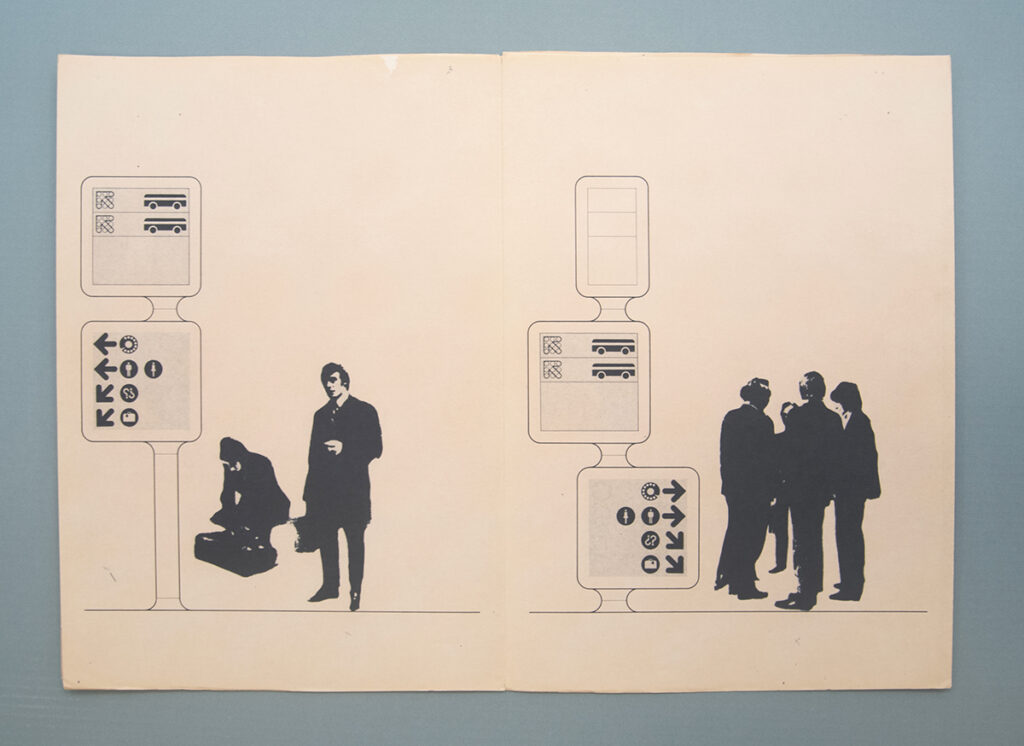
Signage furniture proposal for the Tel Aviv central Bus station, design: Eli Gross and Benno Wissing. Source: 1963 – 1972 Total Design – Archief van Benno Wissing, Allard Pierson, Folder UBA494, inv. nr. 320. Photo: taken by the author.
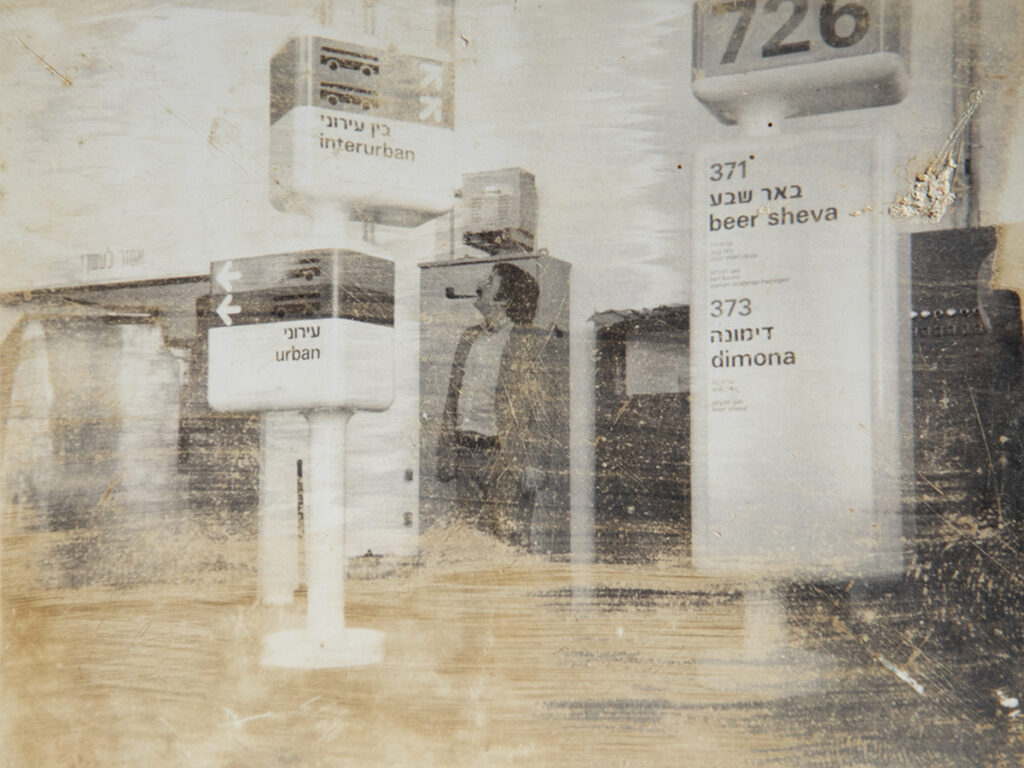
Photograph of Eli standing next to the furniture prototypes he designed for the central bus station in Tel Aviv. Taken around the 70’s. Source: Els Prins, Private Collection.
Another project that is associated with Eli Gross when he worked at Total Design is the Dutch pavilion in Osaka: “As a member of the design team for the Netherlands pavilion at the Osaka Expo in 1970, Wim [Crouwel] was responsible for the decoration of the exterior of the pavilion building as well as various information units and displays, together with the interior design of several representative spaces. In this he was assisted by the Israeli TD designer Eli Gross.” 7
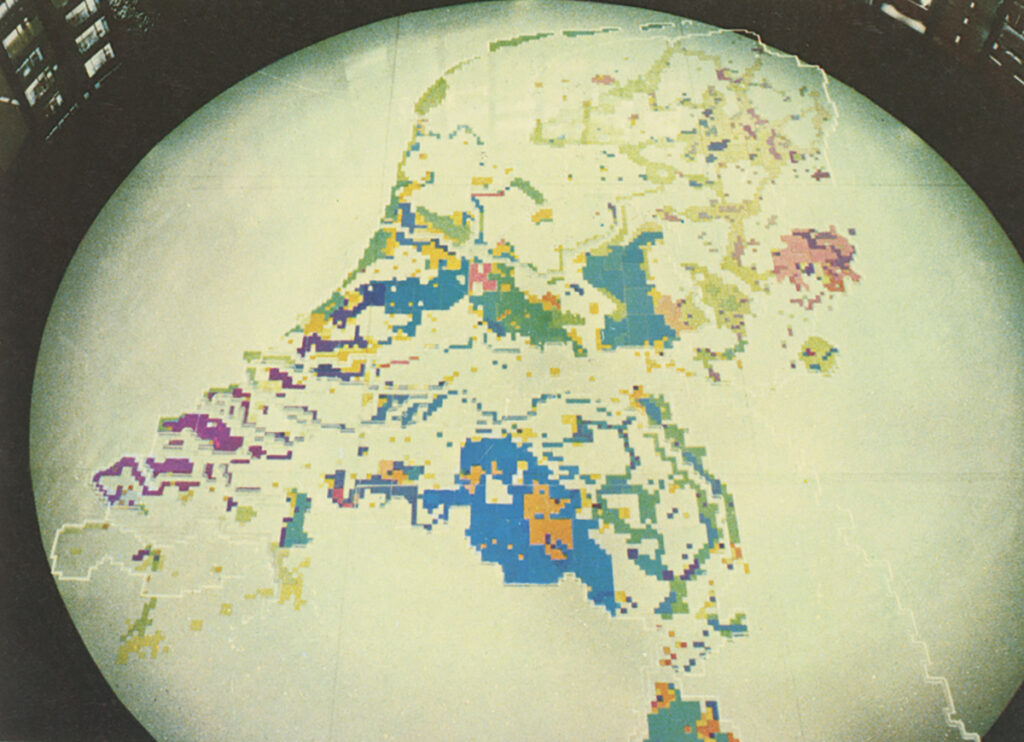
Photograph of the Demographic map of the Netherlands depicting the demographic in 1970.
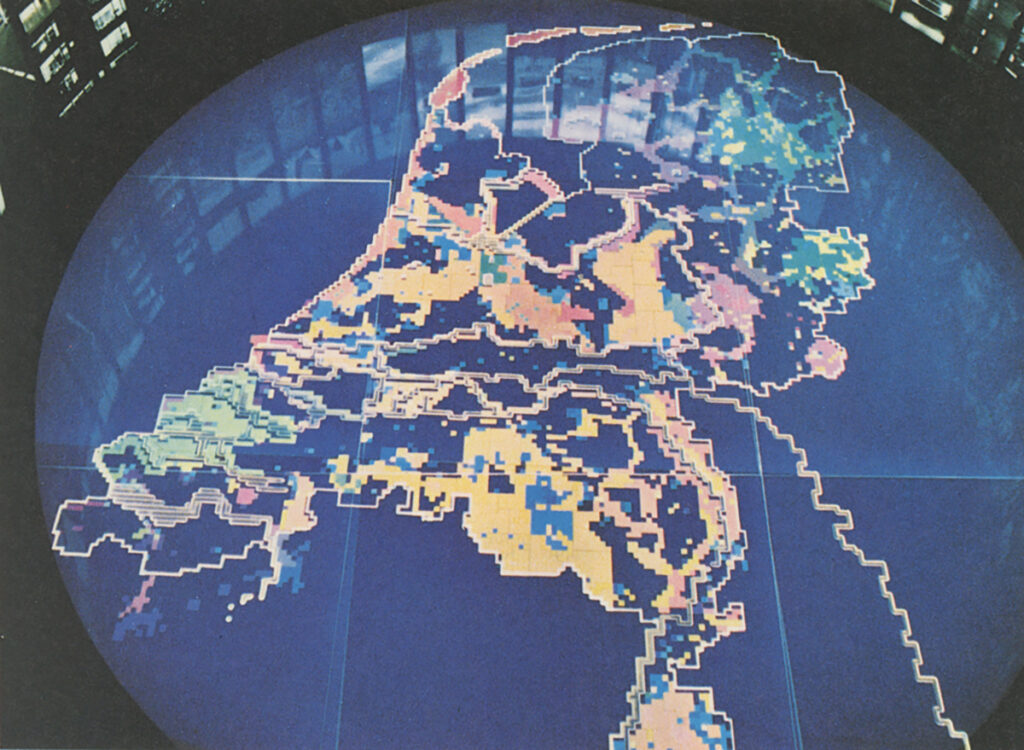
Right: Demographic map of the Netherlands depicting the expected demographic in 2000. Photo scanned from Graphis Diagrams, Photographer: Dolf Kruger.
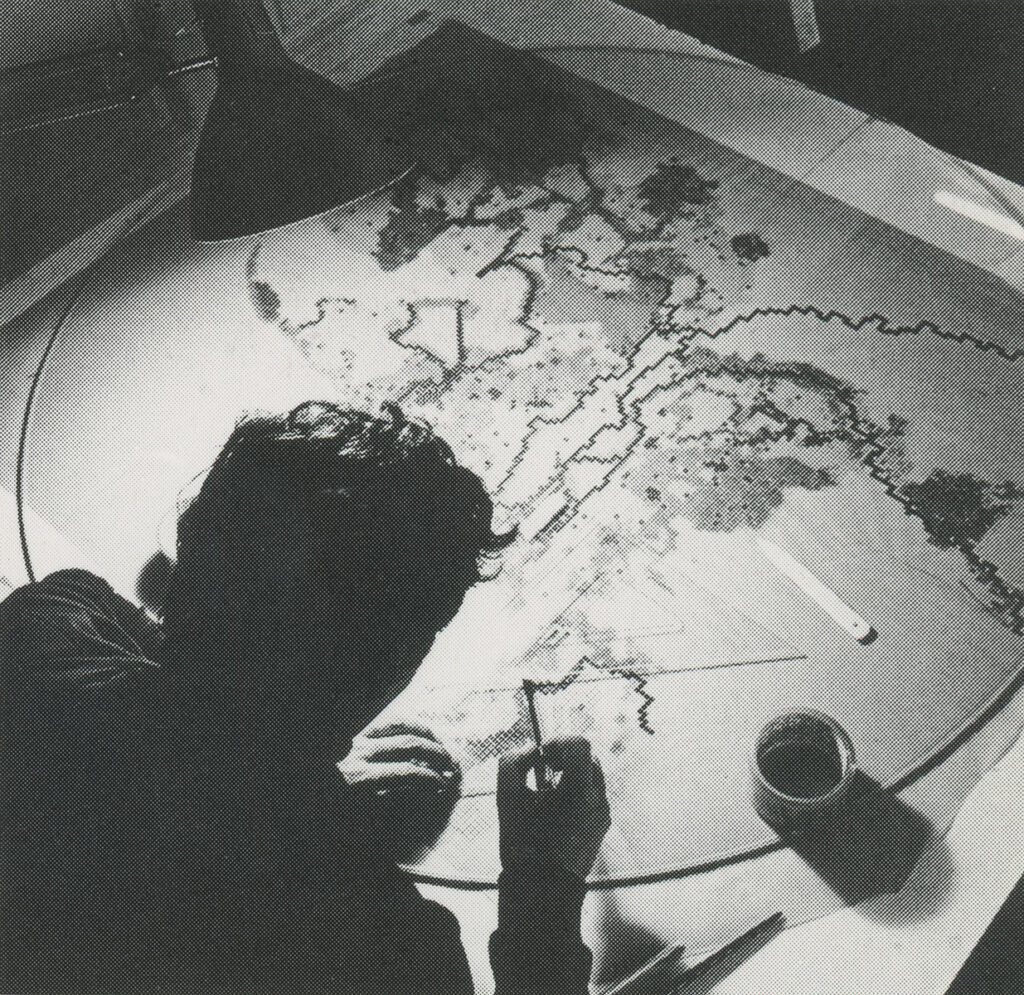
Photograph of preparation the Demographic map of the Netherlands depicting the expected demographic in 2000. Photo scanned from Ontwerp: Total Design. Design: Total Design. Utrecht, 1983, Photographer: Dolf Kruger.
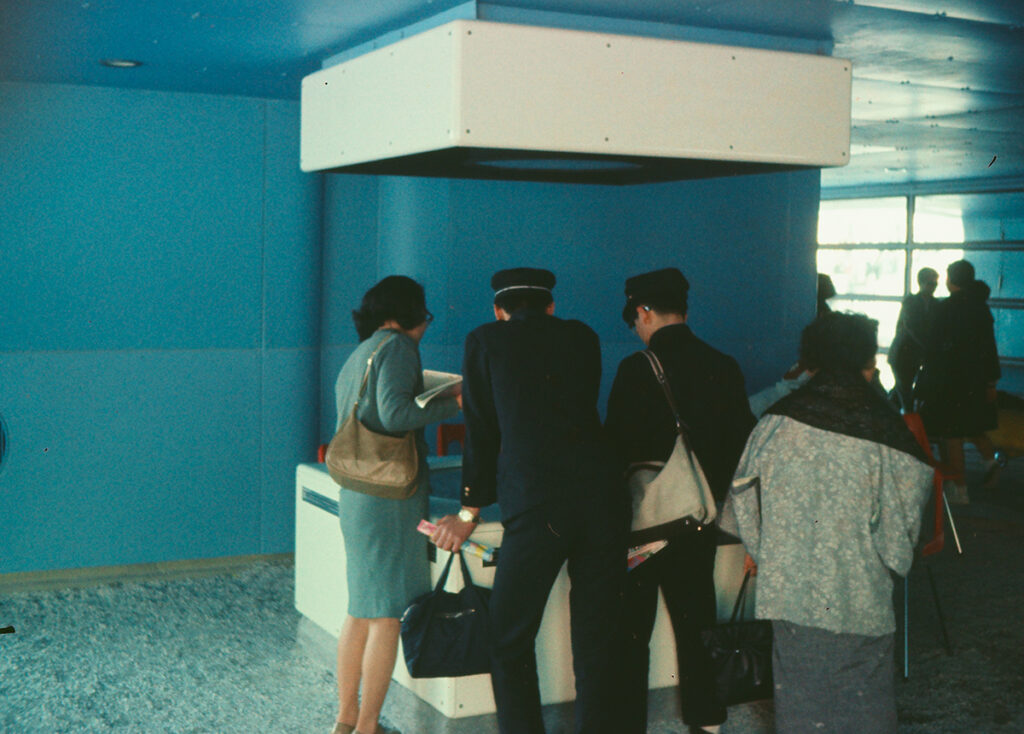
Photograph of the polyester information units that were designed by Woody van Amen, in which the graphics by Gross and Crouwel were placed. Photo found in TD archive.
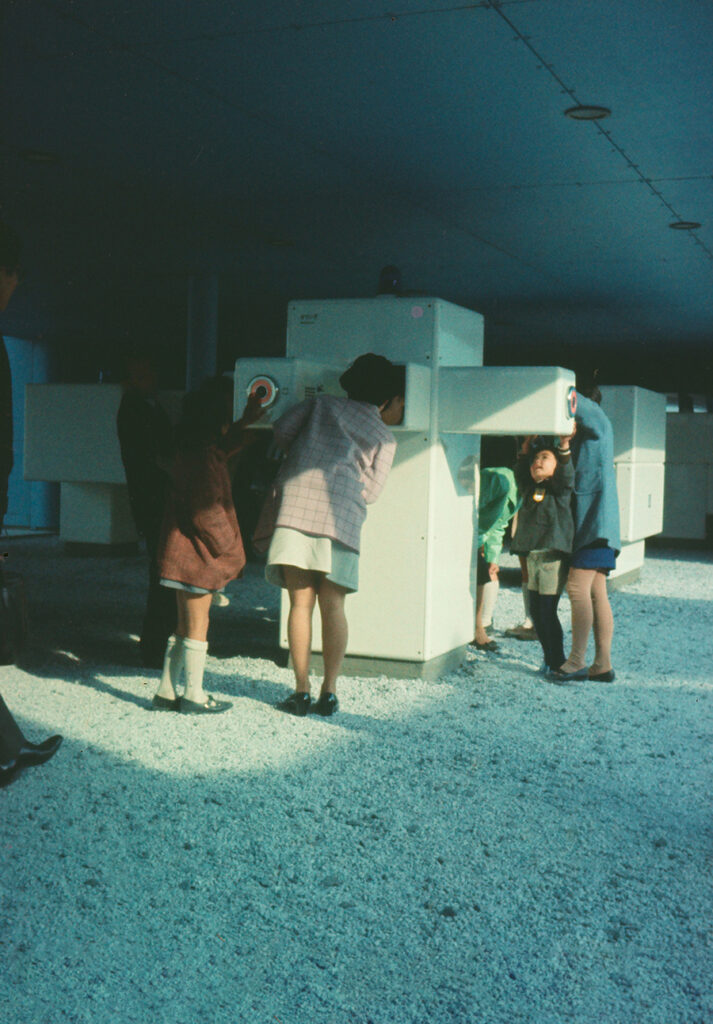
It is unclear what exactly Eli’s involvement in the project was. However, one aspect was well credited and documented: “Map for an audio-visual display unit used in the Dutch pavilion at the World’s Fair in Osaka. The map represented the urban planning scheme of the Netherlands, comparing the situation in 1970 with the one expected in the year 2000. Fig. 225 shows a view into the display unit with surrounding transparencies. The map was constructed on a 5 × 5 mm mesh pattern from clear acetate squares mounted in different directions and layers. The colours were achieved through a light source and two turning polaroid filters.” 8
Although Gross never climbed further in the Total Design hierarchy and got his own team, there is one other major project where is credited as co-designer: “The honeycomb pattern logo for the municipality of Rotterdam pays tribute to the ‘busy bees’ of Rotterdam. At this time, Rotterdam was the second largest city in the Netherlands and the biggest port in the world. Rendering the entire shape of the town with ‘honeycomb’ shapes was a good way to future proof the identity: it could easily be adapted in response to any future developments of the town’s borders and harbours. Eli Gross played a prominent role in the design of the symbol.” 9
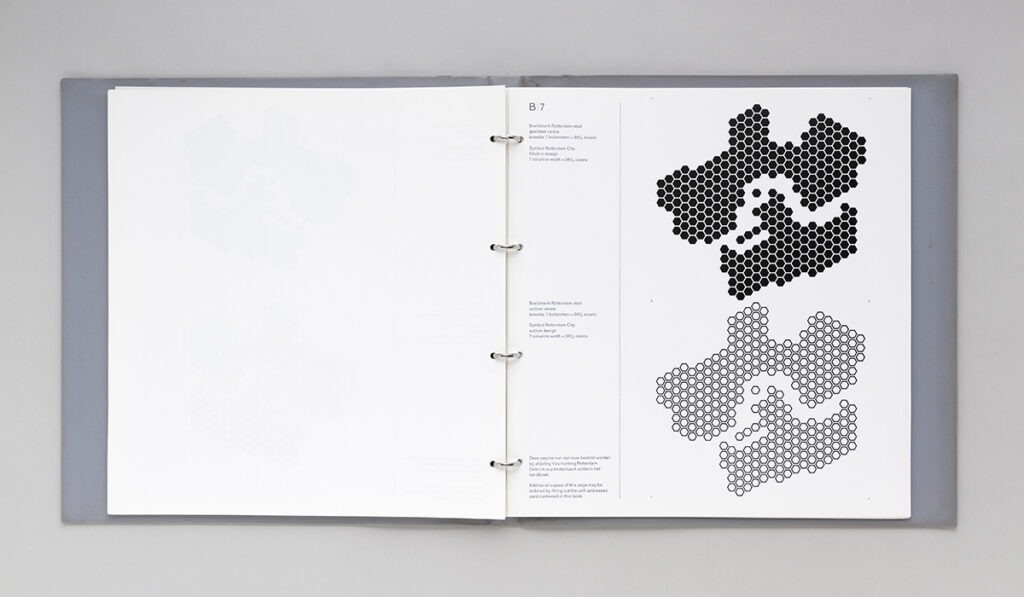
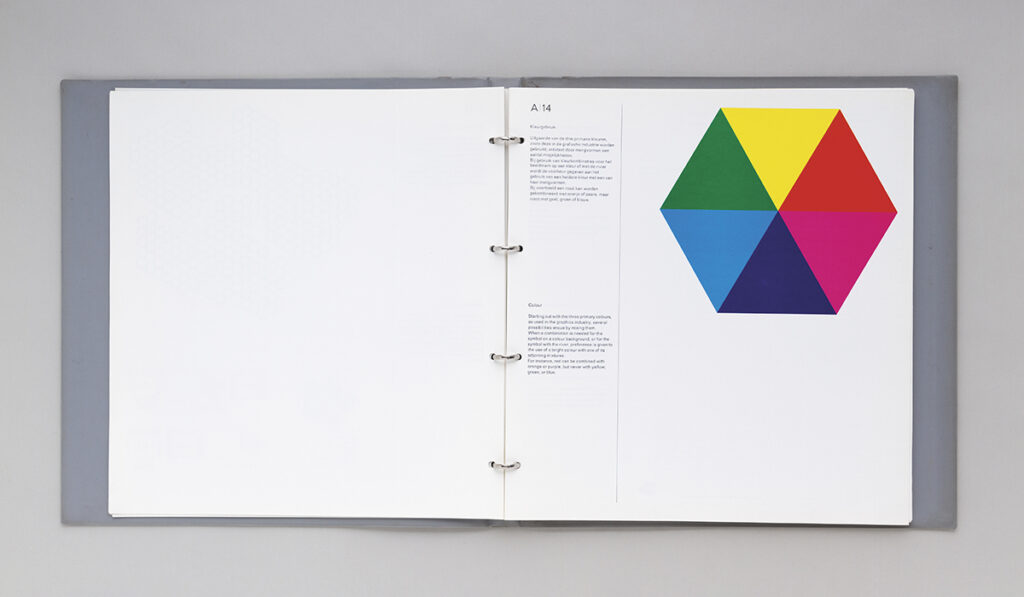
Spreads from Rotterdam design manual. Further TD Designers that are credited in the design manual; Jolijn van de Wouw and John Stegmeyer. Source: TD archive. Image credit: Unit Editions.
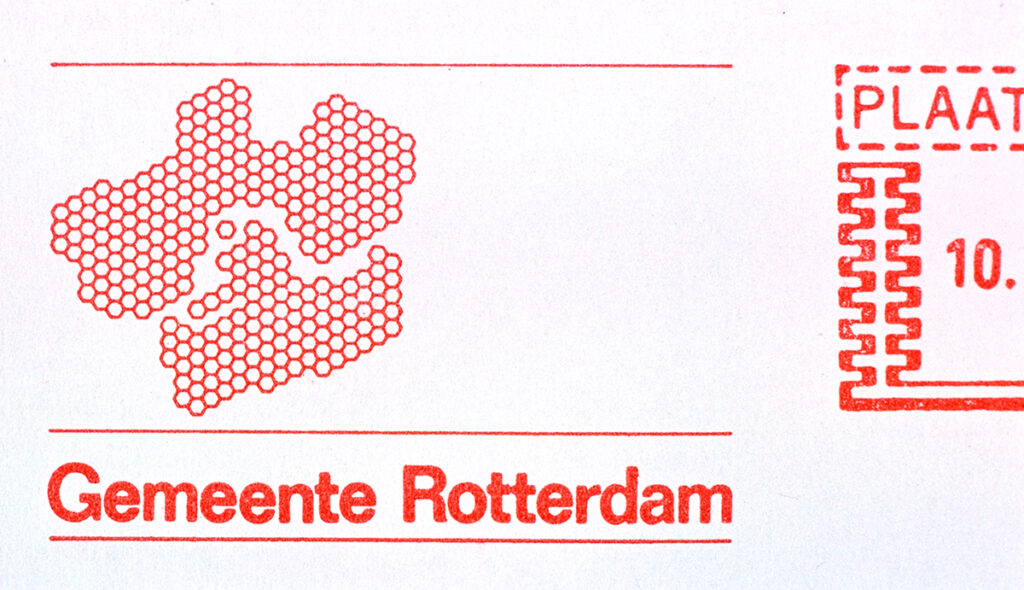
Rotterdam logo printed on official municipal envelopes. Design: Wim Crouwel and Eli Gross.
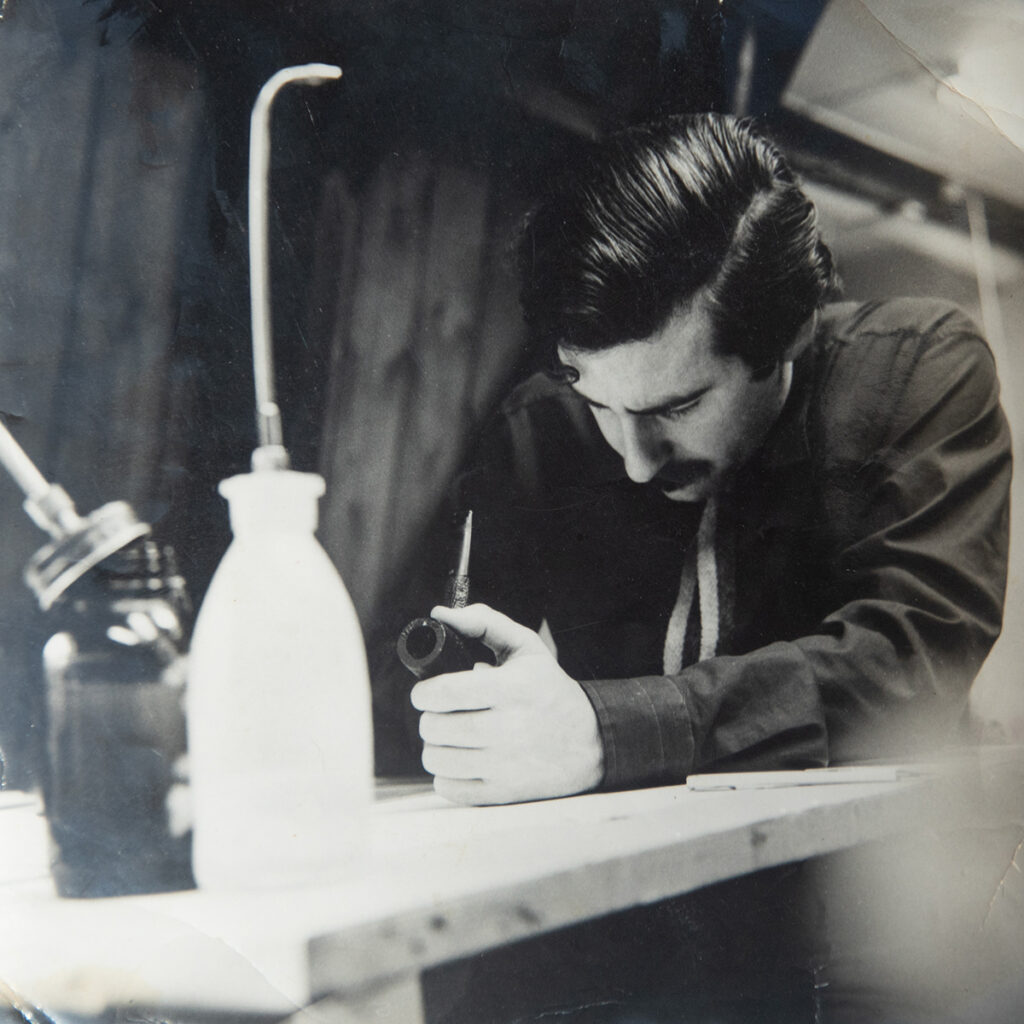
Eli Gross working in Total Design. Source: Els Prins, Private Collection.
Numerous designers have worked as interns and assistants at Total Design. Many of them left the studio to establish their own practices heavily influenced by the Total Design spirit and worldview—just like Eli Gross. What was it that set him apart from the other talents attracted to this renowned studio? The difference with Eli lies in his realization that this design approach was completely absent in his home country, Israel. He understood that by bringing this ‘new design’ to an evolving young Jewish state, he would become a pioneer of the ‘Total Design’ approach. On March 15, 1966, Eli wrote to the photographer Aliza Auerbach: “I want to come to Israel quickly and start working in the country, open a studio, and teach classes at Bezalel. I believe I can do and develop something in graphics in Israel, as the field is hundred years behind.” 10
Dutch design historian Frederike Huygen has written the following about post-war modernism: “By and large what we mean by post-war modernism in graphic design is the International Style. Originating in Switzerland, it was adopted in many other countries. In the Netherlands, too, it became the norm—to the extent that it became so assimilated as a home-grown product that it came to be seen as typically Dutch.” 11
In essence, it was an evolution of the New Typography into a modernist typographic/graphic toolkit: left-aligned text, the use of sans-serif typefaces, clear typographic hierarchy, thoughtful use of white space, rigid grid structures, the integration of asymmetry, and a minimalist design approach that conveys a clear message, free of ornamentation. The core idea of this style is to create timeless design that communicates with the viewer in a direct and universal manner.
It is one of the most prominent movements in visual communication and has spread all across the world. A defining characteristic of the Swiss designers was their persistence and deep commitment to their doctrine. They actively promoted their method through conferences, lectures, and international workshops, such as the Weiterbildungklasse of Armin Hofmann. Many designers around the world adopted the Swiss approach. As Huygen noted, various dialects of Swiss design emerged—Dutch, British, American, and Italian. Was there also an Israeli dialect of Swiss design? Has this style also infiltrated Israeli design culture? And if so, how does it differ from the original Swiss style, which is in its essence very minimalistic, strictly abiding by certain patterns.
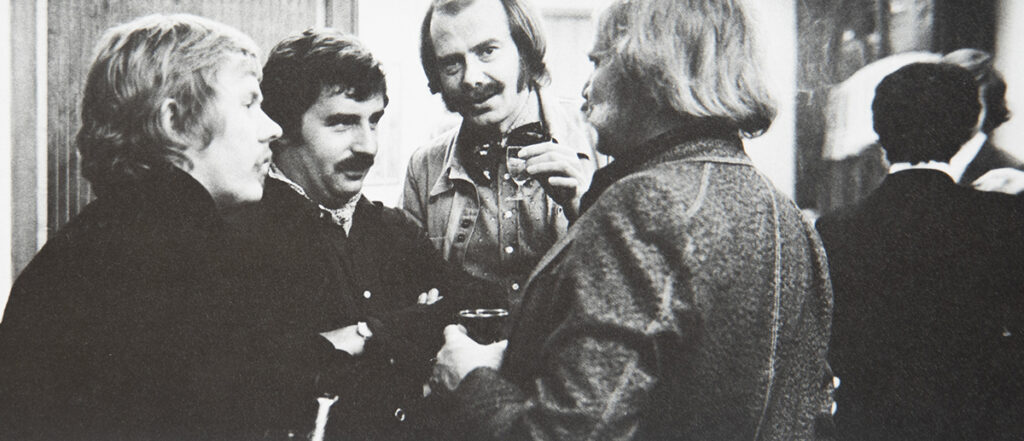
Eli Gross in his wedding with leading Dutch Designers. From right to left: Benno Wissing, Hartmut Kowalke, Eli Gross, Pieter van Delft. Source: Els Prins, Private Collection. Image: Charlotte Wissing.
In 1972, Eli married TD intern Els Prins. Shortly afterward the couple moved to Israel and settled in a modest apartment in Jaffa. After relocating, on July 3, 1973, he founded his design company, E. Gross Designers Ltd.12 Relatively soon after, work began to flow into the small studio apartment located in Eli’s house. Most of the projects were commissioned through signage factories such as Kadouri Signs Ltd. and Tidhar Signage and Arts Ltd., which won public tenders and then subcontracted Gross, who had acquired ample knowledge of wayfinding systems at Total Design. The scale and importance of these projects were undeniably impressive, as many of their elements became embedded in the collective memory of Israeli citizens.
One notable example was the new house style for Bank Leumi, based on a 1:5 horizontal grid system that could be adapted to stretch signage across façades. This was completely innovative at a time when the visual language of banks and institutions was still rooted in eclectic European styles with sporadic layouts. For this work, and many other works of Eli, he utilized the typeface Oron, designed by Asher Oron in 1966, the first Hebrew typeface deliberately designed as a counterpart—or derivative—of an existing Latin typeface: Adrian Frutiger’s Univers.
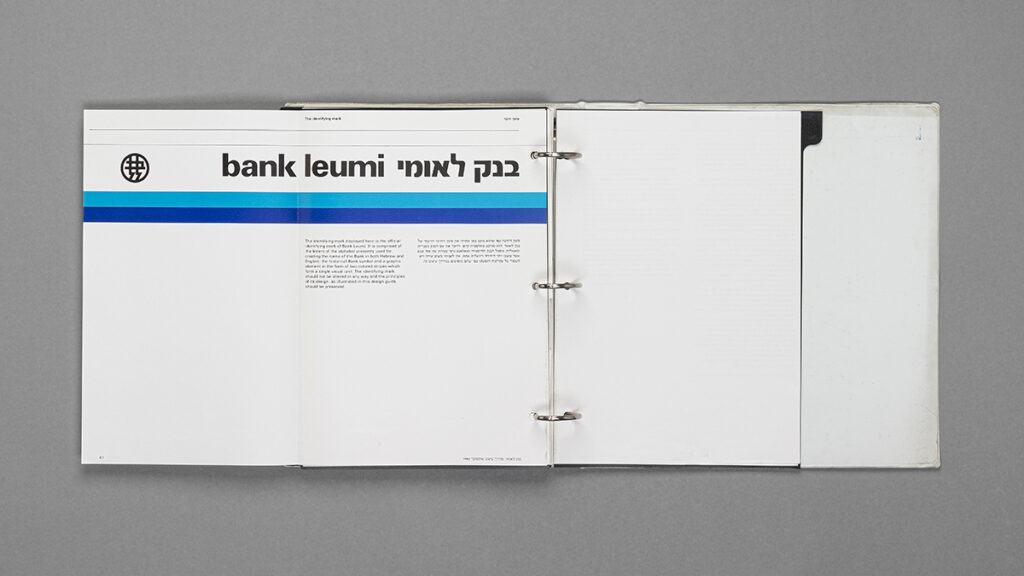
Pages from Bank Leumi Design Manual showcasing the New design system. Source: Firma. Photo credit: Keith Glassman.
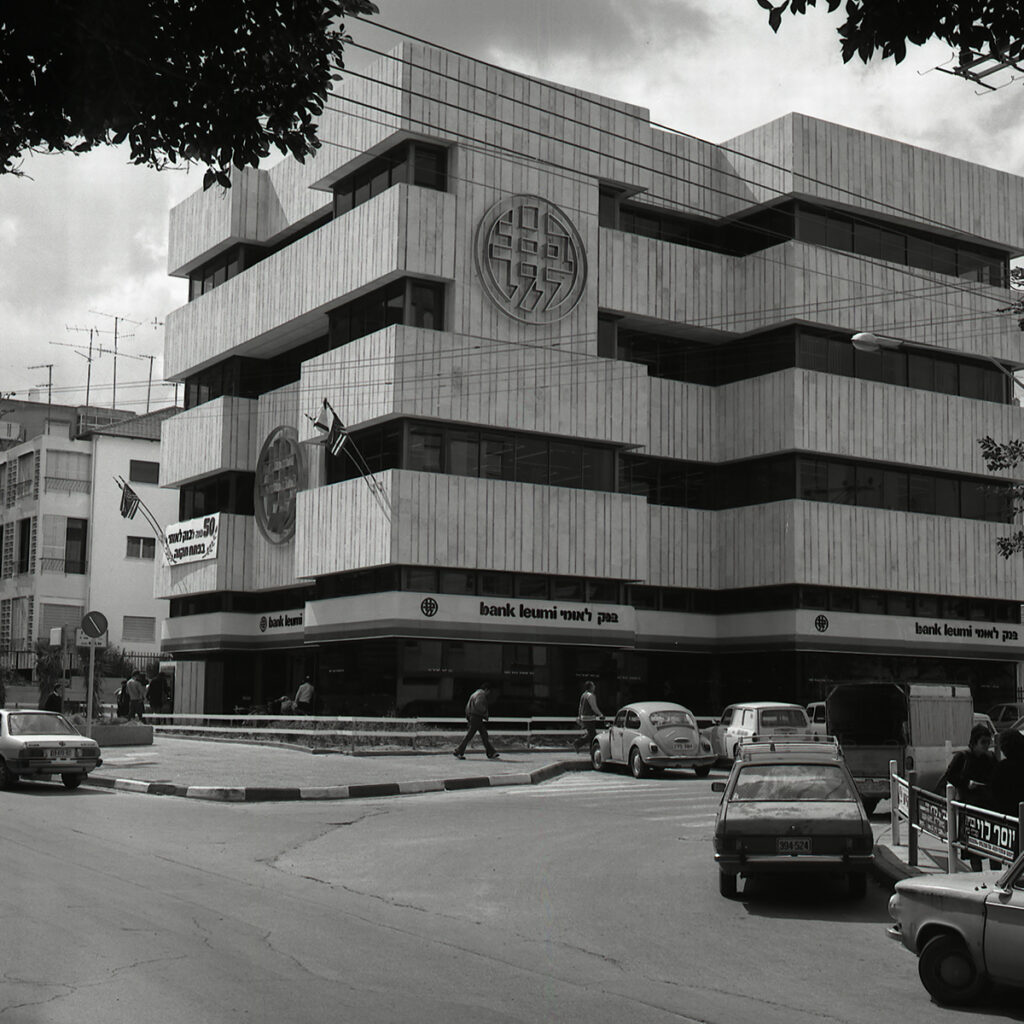
Bank Leumi branch “Hillel” in Rothschild street in Petah Tikvah, 1981. Source: Digital image of photograph by Israel Haramati, from the Judaica Collection of the Harvard Library, Harvard University.
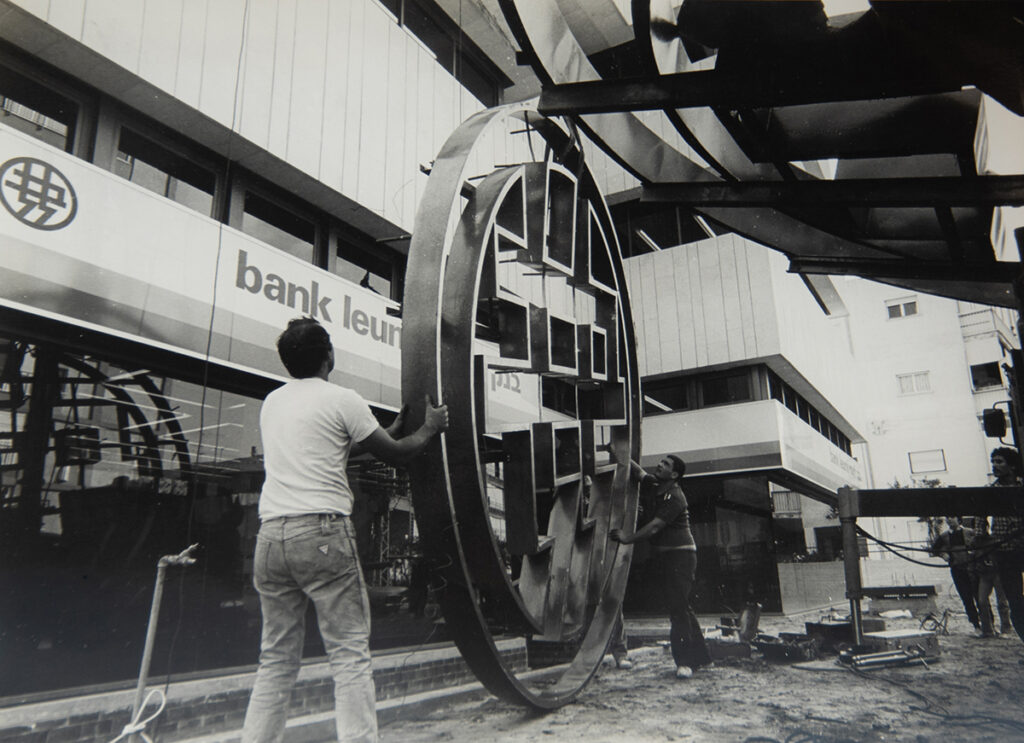
Installation of signage at the Bank Leumi branch “Hillel” in Rothschild street in Petah Tikvah. Source: Els Prins, Private Collection.
Equally significant was the house style and logo for Kupat Cholim, Israel’s largest and oldest health insurance provider, which to this day serves more than fifty percent of Israeli citizens. This identity became a constant meeting point between Israelis and the modernist approach that Gross brought with him from the Netherlands.
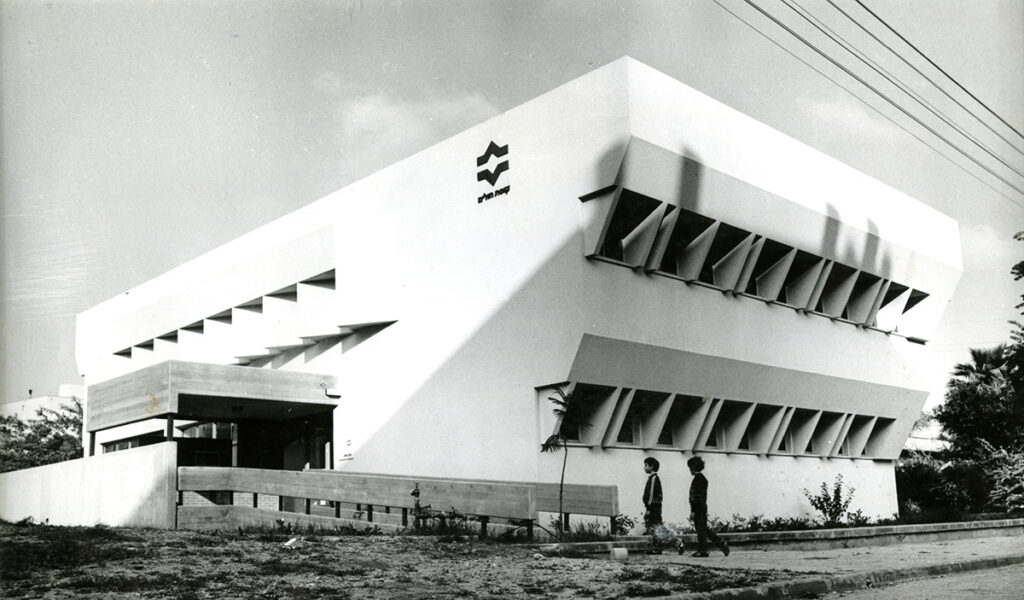
New Kupat Holim Clalit clinic in the Bavli neighborhood in Tel Aviv, 1983. Source: Digital image of photograph by Assaf Shilo/Israel Sun Ltd., from the Judaica Collection of the Harvard Library, Harvard University.
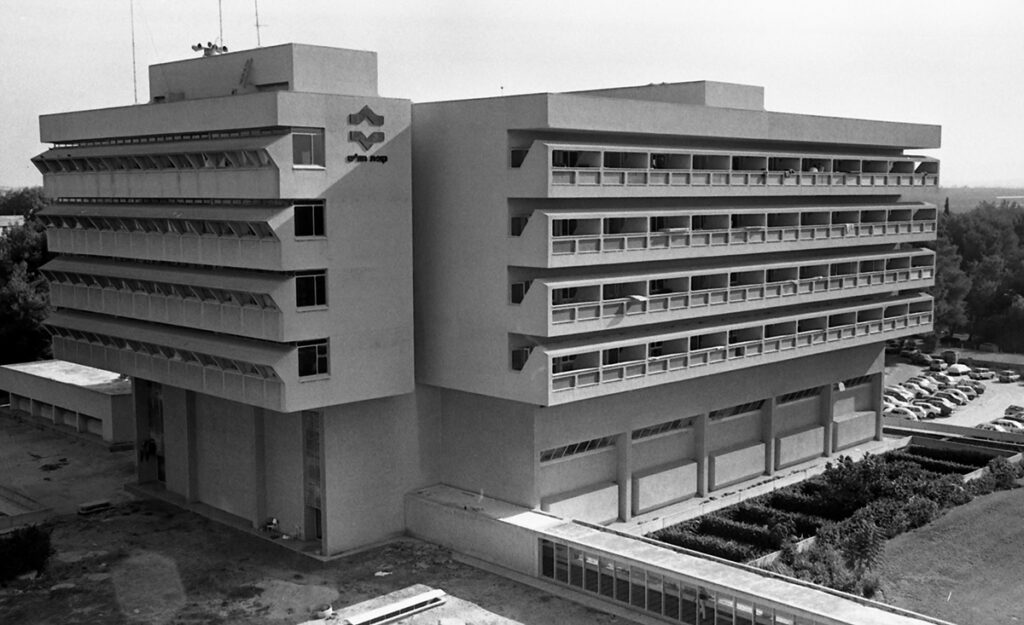
Kupat Cholim Logo on Kaplan Hospital Rehovot, 1982. Source: Digital image of photograph by Yisra’el Simionski/Israel Sun Ltd., from the Judaica Collection of the Harvard Library, Harvard University.
Another field which Gross specialized in was wayfinding. Notably, he designed the wayfinding system for Ben Gurion International Airport’s Terminal 1 in the 1970s. As the project evolved and required new sections and elements, he later designed, in the 1980s, the ‘welcome to israel’ sign—a piece that has become embedded in the collective memory of both visitors and residents. Interestingly, his original lowercase typography was later replaced with title case typography. 13
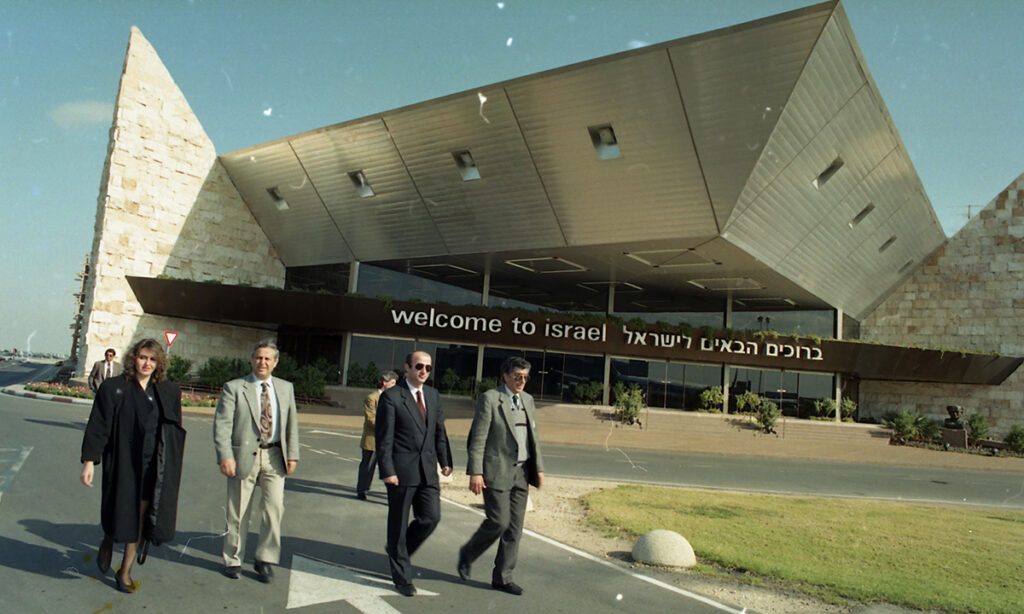
Original entrance sign for the Ben Gurion Airport, in lowercase letters, photo dating 1991. Source: Digital image of photograph by Nava Shemesh/Israel Sun Ltd., from the Judaica Collection of the Harvard Library, Harvard University.
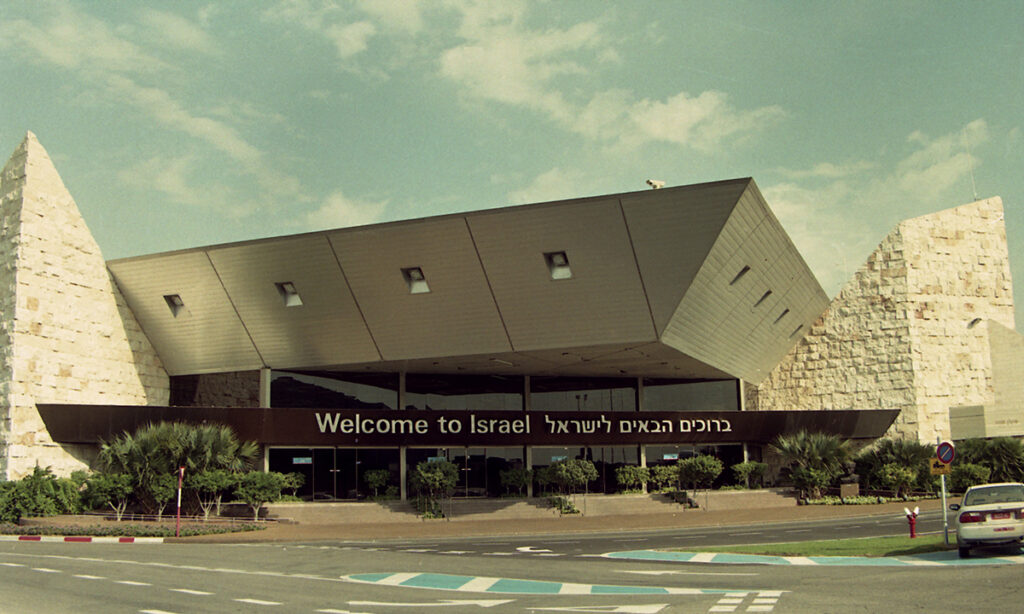
Amended sign in Title Case, photo dating 1997. Source: Digital image of photograph by Yonatan Selinger/Israel Sun Ltd., from the Judaica Collection of the Harvard Library, Harvard University.
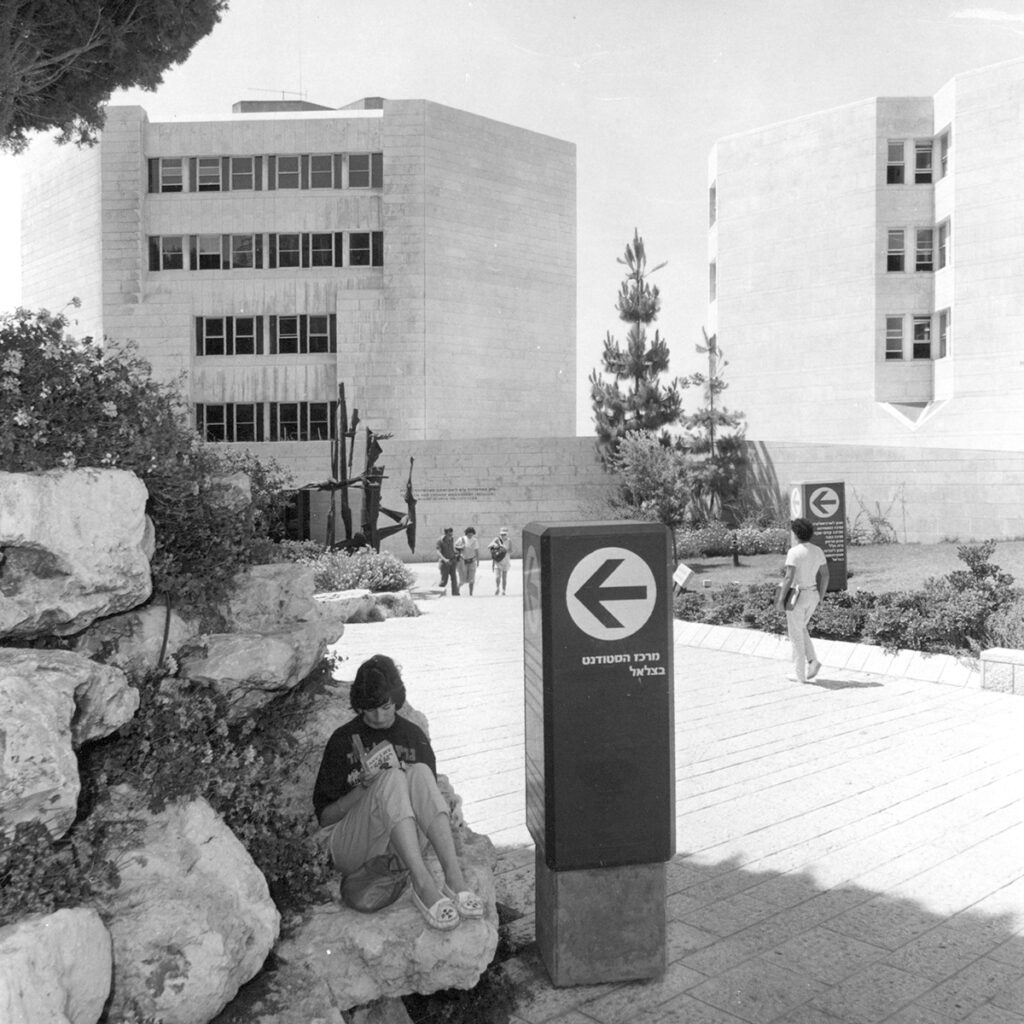
Wayfinding system for the Hebrew University. Image courtesy: the photo archive of the Hebrew University of Jerusalem.
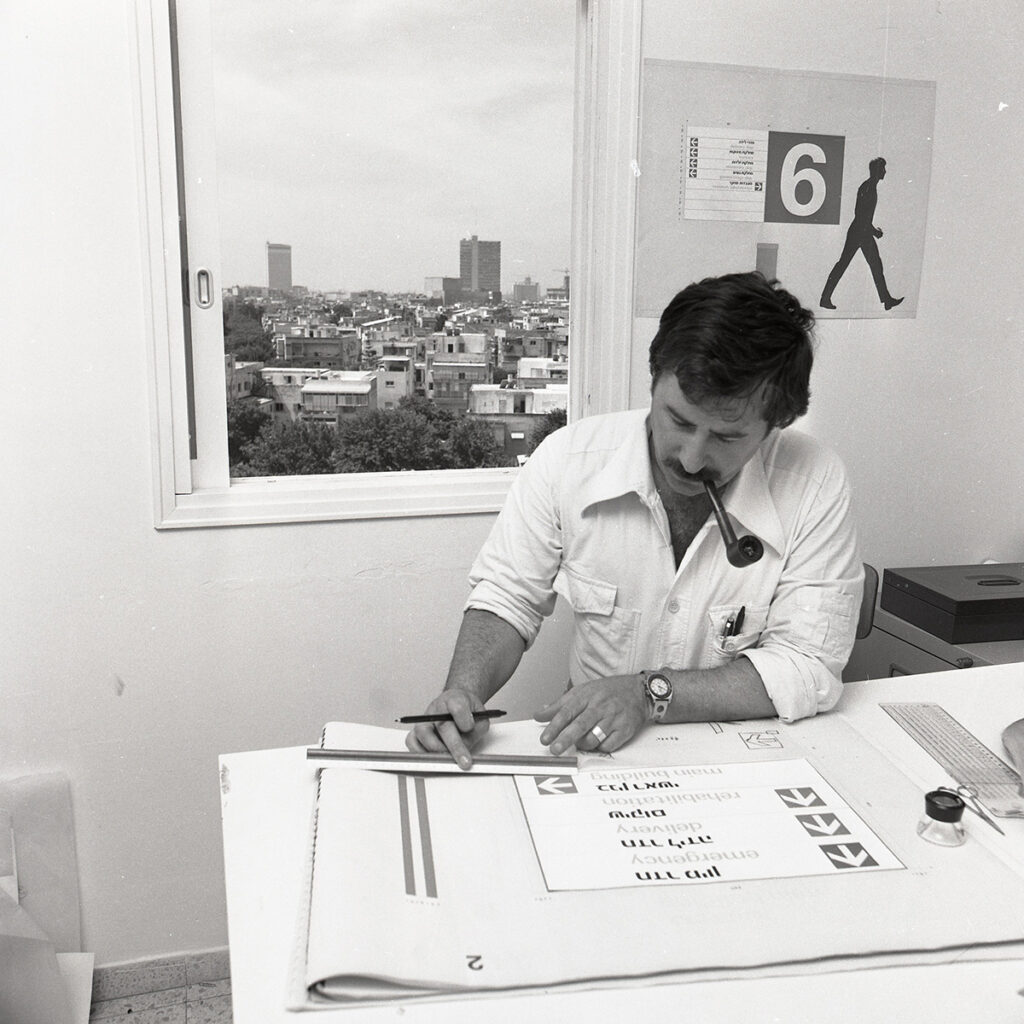
Eli Gross working on the Shaare Zedek Hospital wayfinding system from his home studio in Tel Aviv. Photo credit: Werner Braun, the Werner Braun Photography Collection, the Shoshana and Asher Halevy Photo Archives, Yad Yitzhak Ben-Zvi.
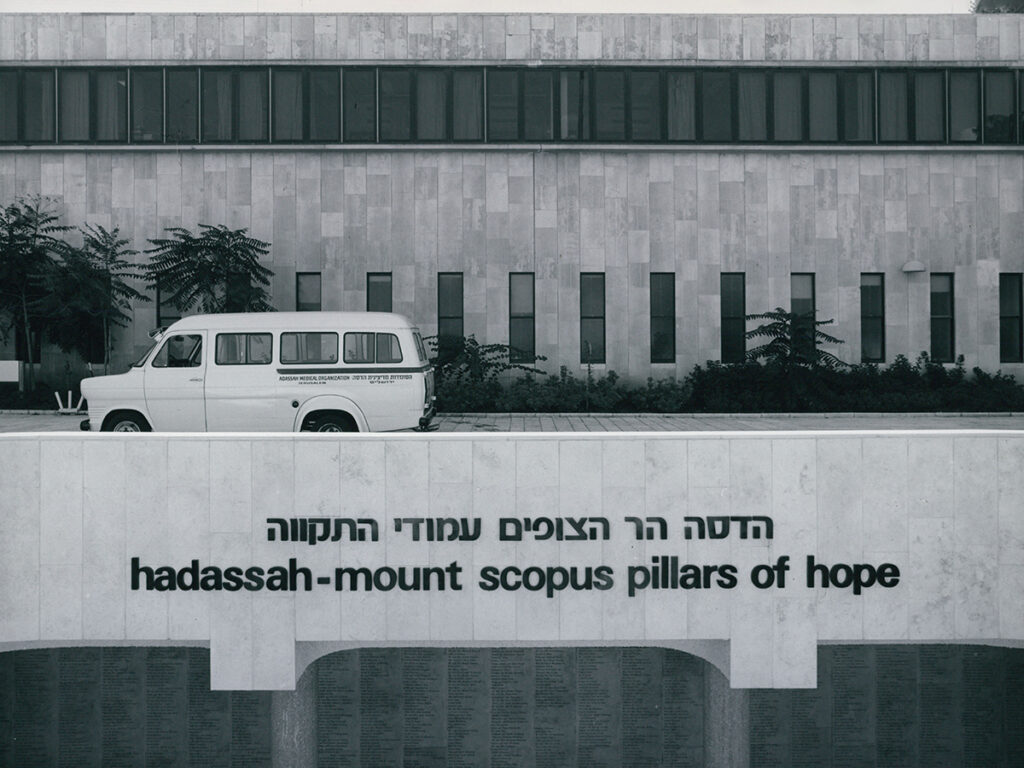
Signage for Hadassah hospital in Jerusalem. Image courtesy of the Azrieli Architectural Archive; Ze’ev andYaakov Rechter Collection. Photo: Studio Keren Or.
An iconic design worth noting is the set of postal boxes created for the Israel Postal Authority, likely dating to the mid-1980s. The design is striking in its simplicity: two flat tubes bent at the top, one red and one yellow, standing back to back. The yellow box was for local mail while the red one was for inter-city destinations. The use of red carried over from post boxes of the British Mandate period. Little information about this design survives, perhaps because its very ubiquity and functionality rendered it almost invisible—an everyday object that quietly fulfilled its purpose without drawing attention to itself.
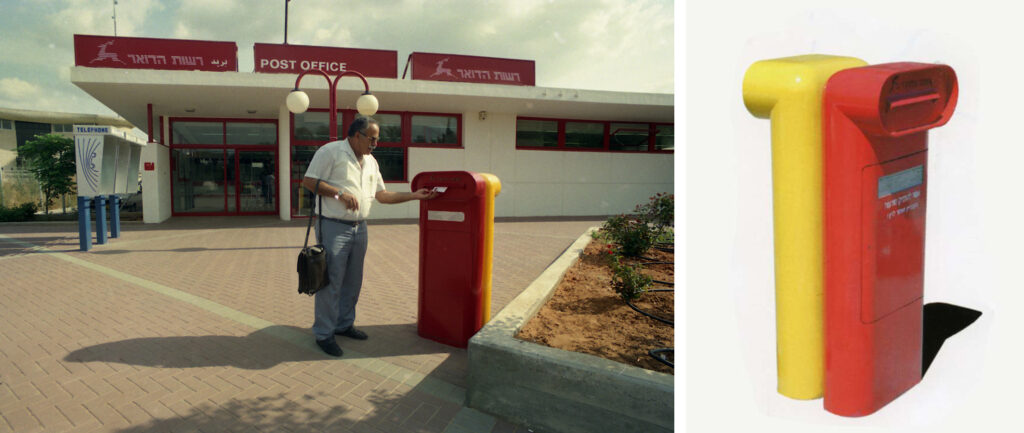
Left: Post office in Haifa, 1991. Photo source: Digital image of photograph by Tamar Matzafi/Israel Sun Ltd., from the Judaica Collection of the Harvard Library, Harvard University. Right: The post boxes, source: Artist estate from Artist entry on the Israel Museum website.
Between 1973 and the early 1990s, Eli Gross served as a senior lecturer at the Bezalel Academy of Arts and Design as well as at the Technion’s Faculty of Architecture and Town Planning, where he taught several semesters as a senior lecturer starting in 1975. He was known as a particularly strict lecturer, offering honest and direct criticism that at times bordered on the personal. Yet he also brought with him a depth of knowledge from the Netherlands that no other teacher possessed, ultimately shaping generations of design students. In a letter found in the Amsterdam City Archives, written by Wim Crouwel to the Bezalel Academy recommending Gross (as well as other lecturers) for promotion to senior lecturer, Crouwel wrote about Gross: “Professionally he is one of the best in Israel.” 14
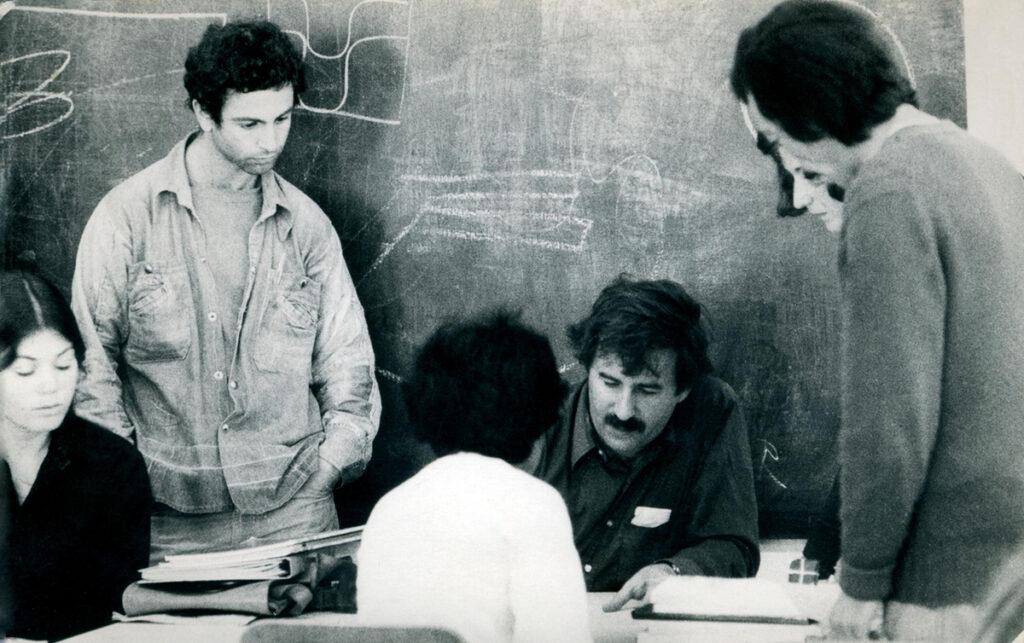
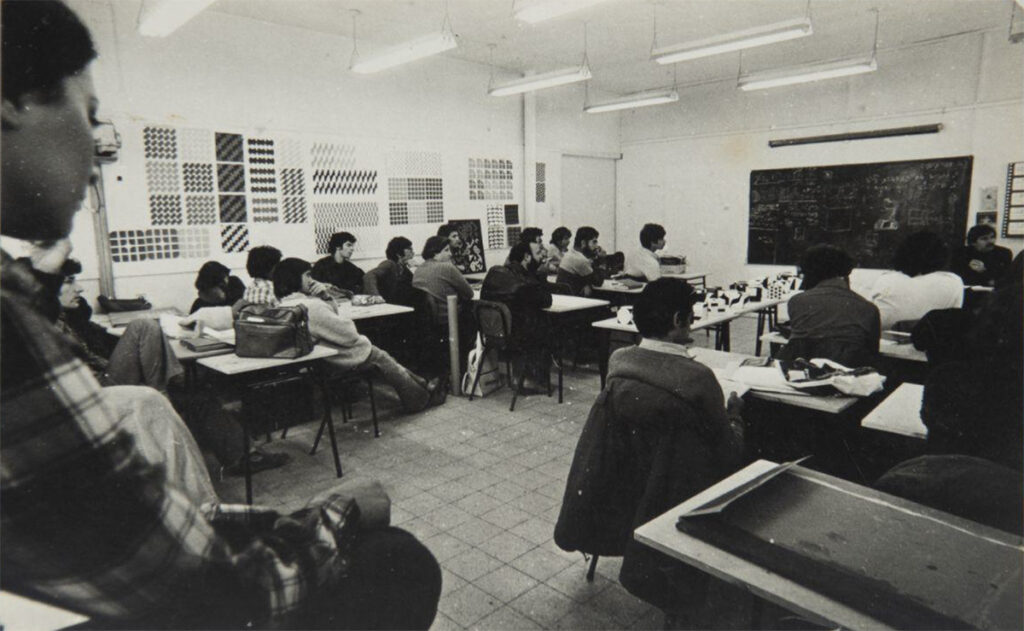
Eli Gross with students at Bezalel 1976. Images courtesy Bezalel Archive.
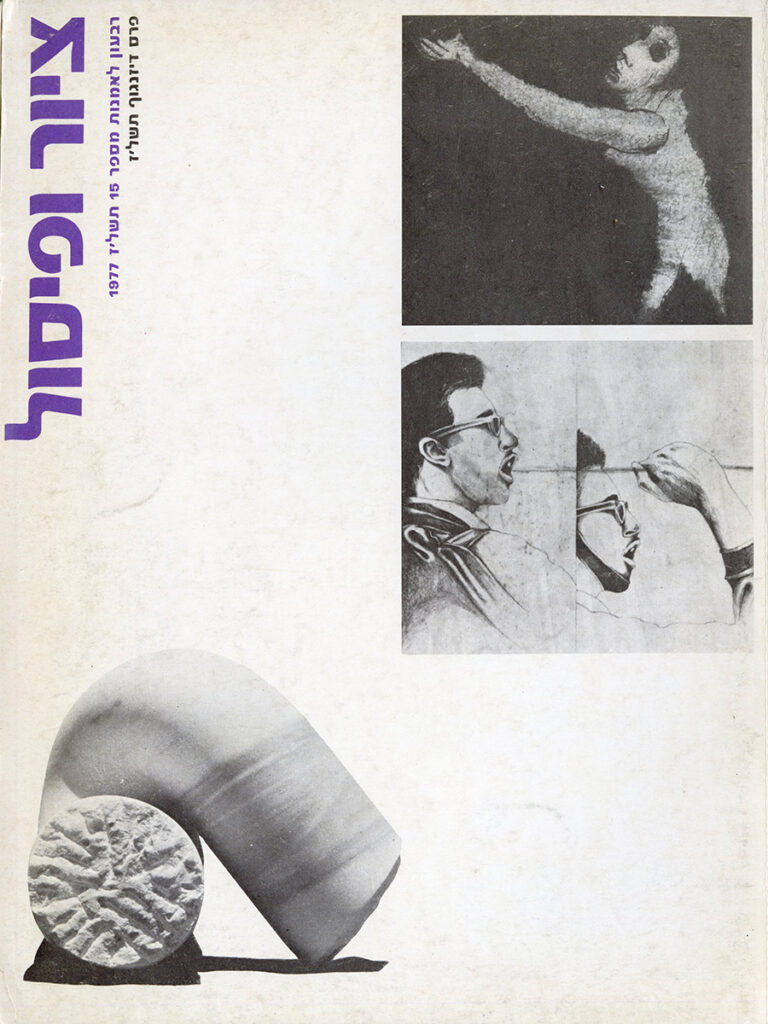
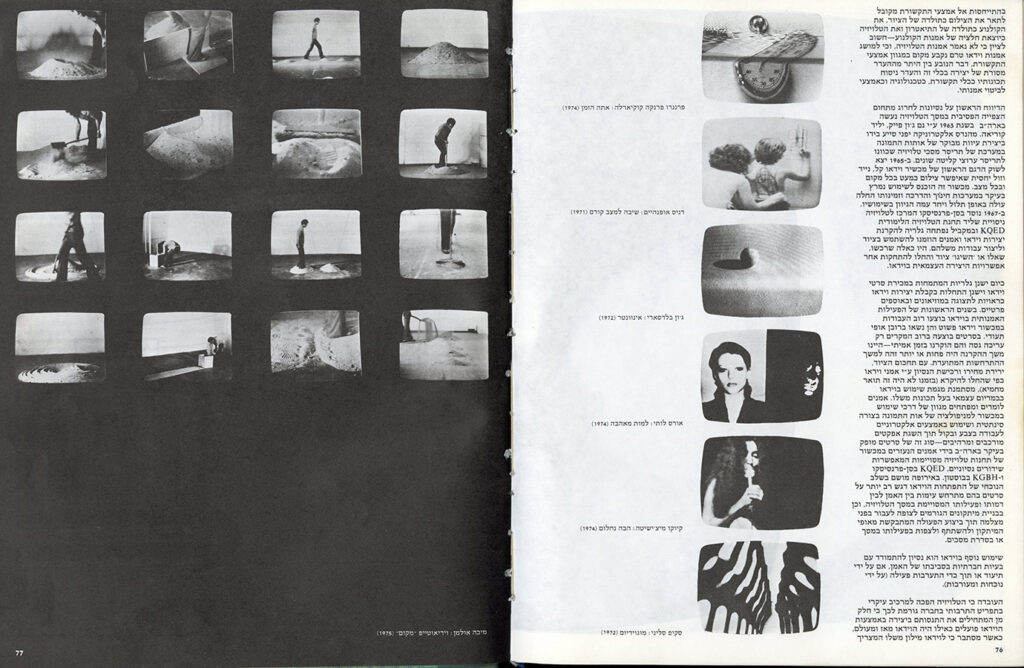
Layout and cover design for “Painting and Sculpture magazine” Designed by Gross for magazine editor Dan Tsalka. Source: Courtesy of the Tsalka estate.
A notable project from the Bezalel Academy that Eli was deeply involved in was the Bezalel + 70 exhibition. Renowned worldwide to this day, Bezalel has a historic position in Israel. Founded in 1903 by Jewish artist Boris Schatz, the academy has always been closely intertwined with the visual culture and arts of the modern Jewish state. Initiated to celebrate the seventieth anniversary of the academy, the exhibition was held from September 19 to November 8, 1975, in the Helena Rubinstein Pavilion of the Tel-Aviv Museum of Art. Its motto was ‘Bezalel—Yesterday, today and tomorrow.’ Designed and curated through a joint collaboration between lecturers and students, it was prepared over an intensive three-month period. Eli Gross, Mike Felheim, and Arthur Goldreich led the design and curation. 15
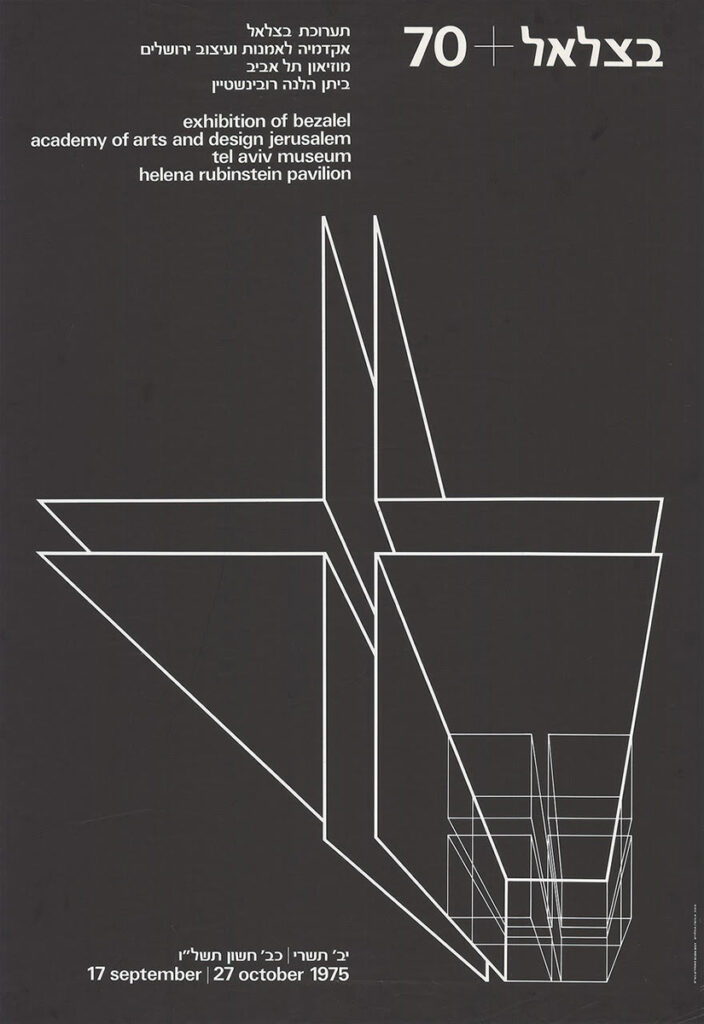
Bezalel + 70 Poster, featuring a strict grid, alignment of text to the right and usage of white space and clear hierarchy. Design: Mike Felheim and Eli Gross. Image source: Basel Poster Collection.
Epilogue
The remarkable fact remains that, since his passing in 1996, Eli Gross has been almost entirely forgotten although he contributed much to the aesthetics of Israeli visual culture—his work was never analyzed in depth and is as good as absent from the design history discourse. Reconstructing his career proved challenging. Scattered traces were found in museum libraries, photo archives, personal archives, etc. In 1994, a modest retrospective exhibition dedicated to Eli’s work was held in the Ramat Gan Museum of Israeli Art under the title Order Meets Chaos. For the exhibition a small catalog was printed, in which Prof. Yarom Vardimon writes: “Disorder is perceived by Gross as an undemocratic phenomenon. For him, chaos is a state of coercion and oppression.” 16
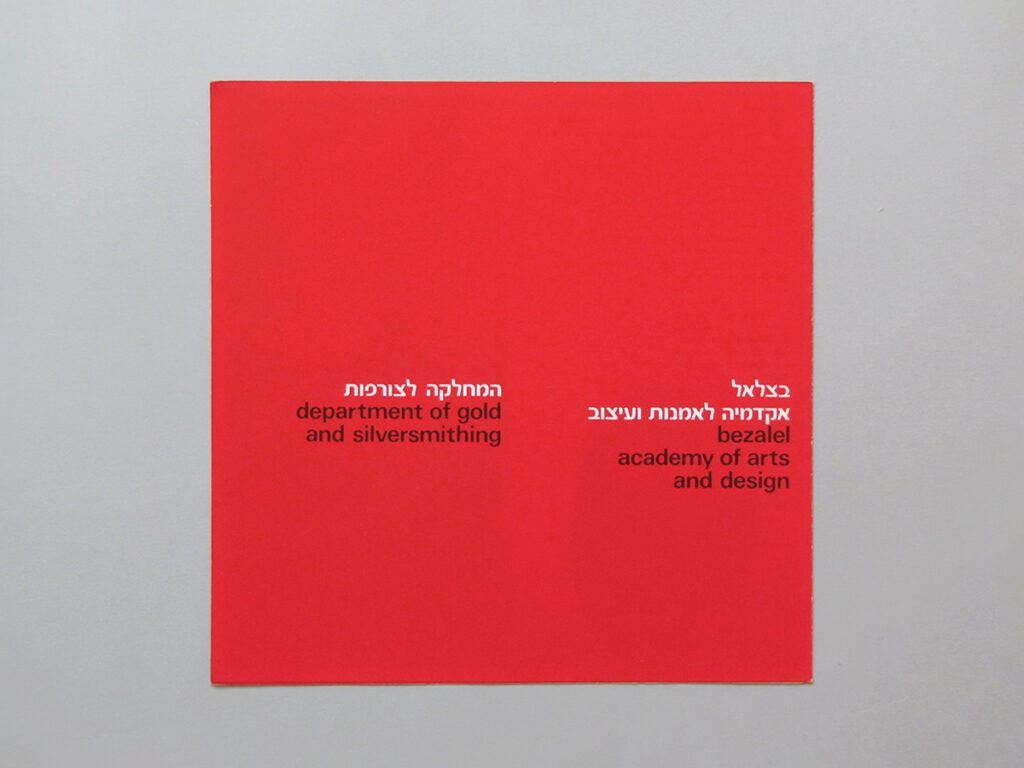
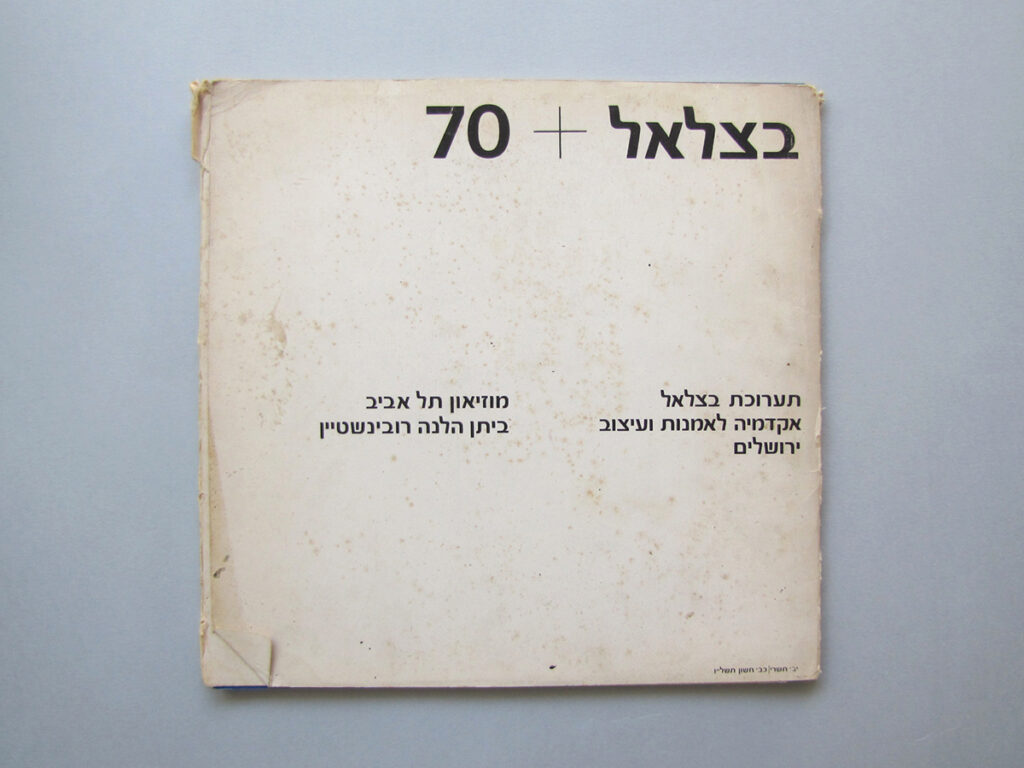
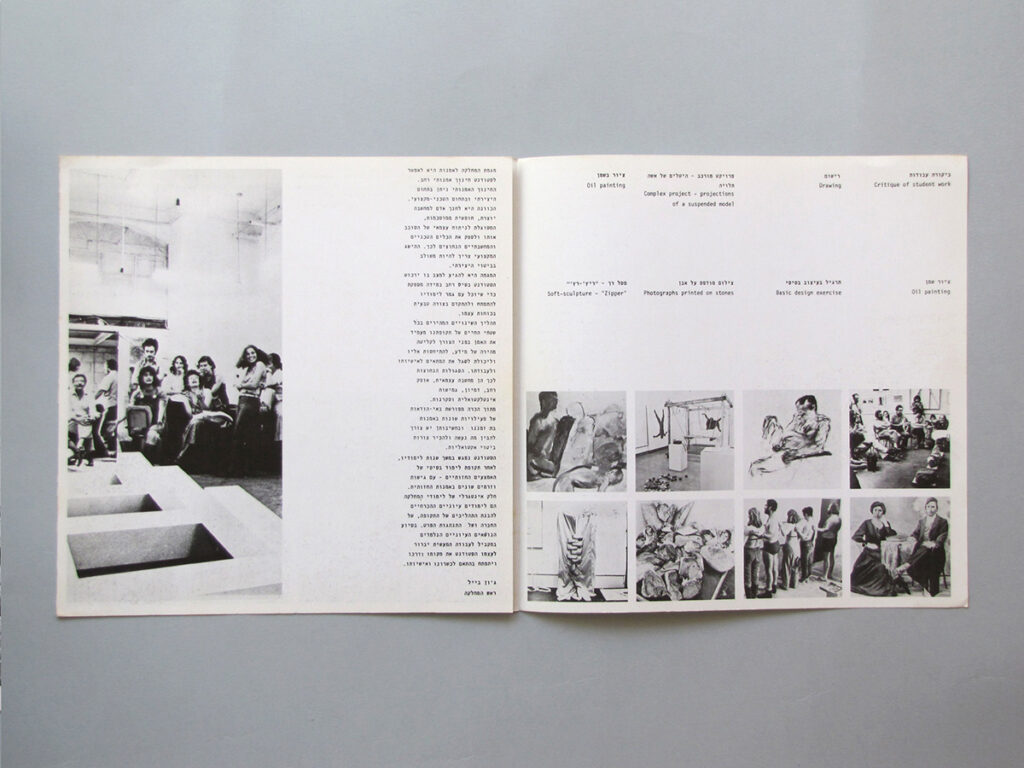
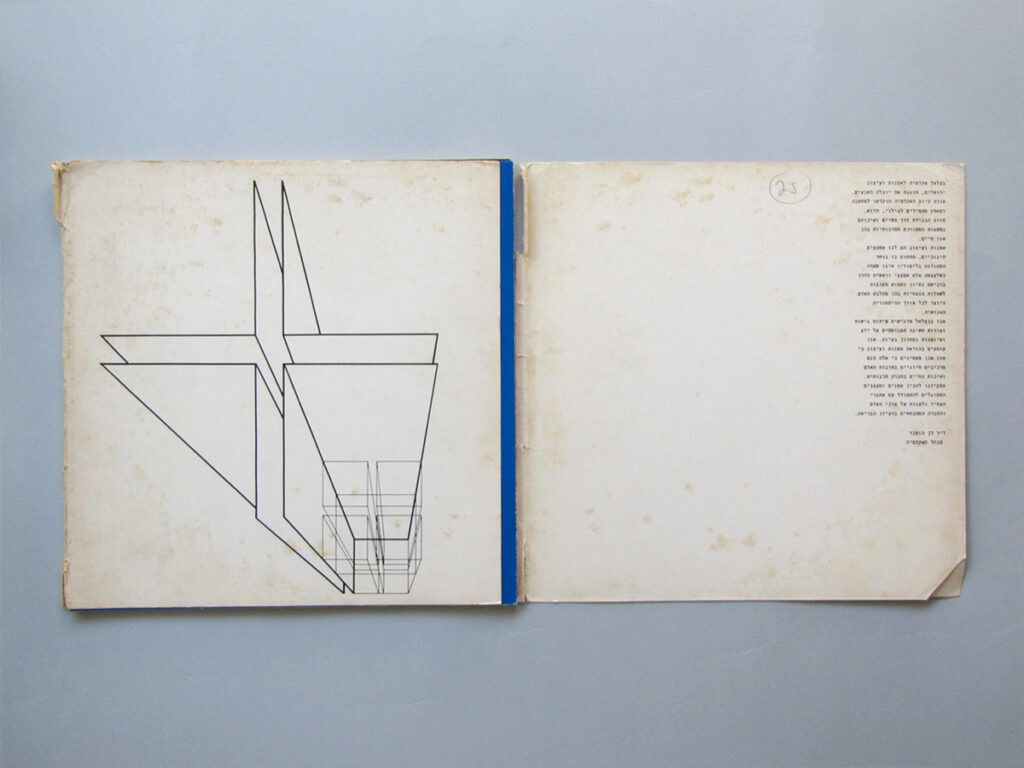
The “Bezalel +70” Catalog was a joint cooperation between lecturers and students. Design (Faculty): Eli Gross, Mike Felheim, Arthur Goldreich. Students: Zvika Rosenberg, G. Friedman, Suzanne Wolf Werbe, Aliza Matlon, P. Wiener, S. Harburger. Image courtesy: Public School.
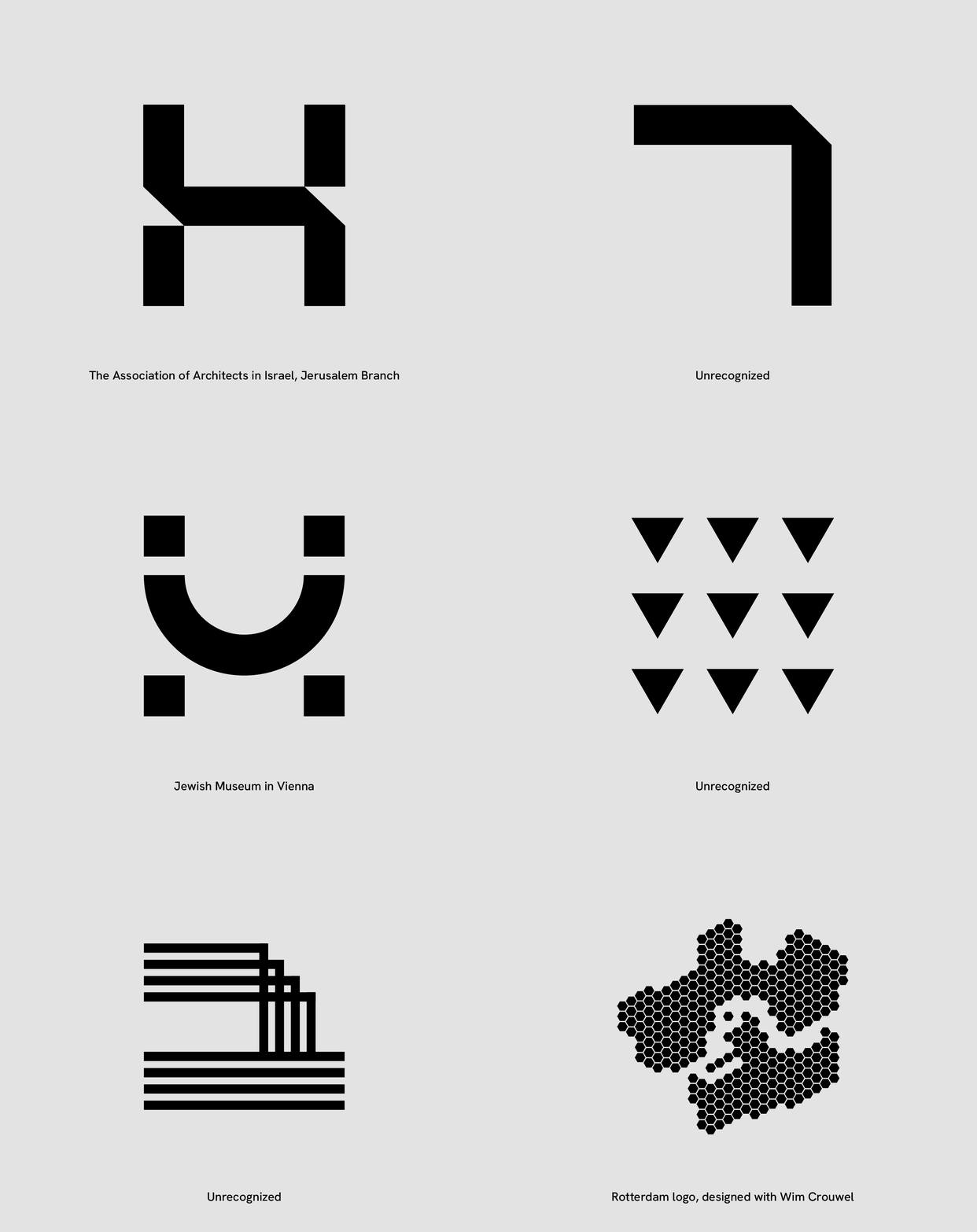
The exhibition catalog Order Meets Chaos includes an almost complete set of logos designed by Eli Gross. Unfortunately, the logos lack descriptions. While many have been identified through cross-referencing with other archival materials, some remain unrecognized. Image source: Arranged by Author.
Since January 2025, I have been dedicated to collecting, analyzing, and reconstructing Eli Gross’s body of work, recognizing him as one of the pioneers of modernism in Israel and documenting this overlooked chapter of Israeli and Dutch design history. I am currently writing a comprehensive monograph on Gross’s work in order to address the lack of academic material on ‘Israeli Design’ and the adaptation of modernism in Israel.
Many questions about Gross’s career and life remain unanswered, and since his passing in 1996 it is no longer possible to interview him. Gross left two sons, who were raised in the Netherlands, and both went on to pursue creative careers. Their recently discovered family estate preserves a small but valuable body of material that helps fill some of these gaps.
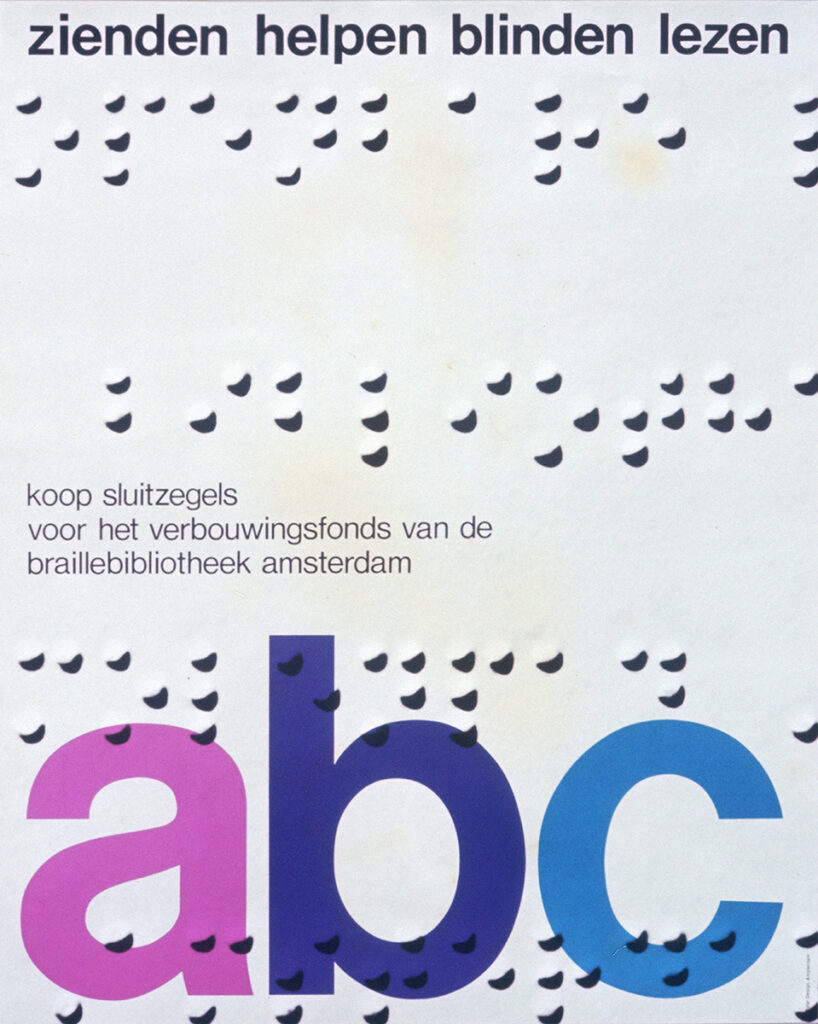
Braillebibliotheek poster, photographed from an archival slide. No further Information about this project has been located to date. Source: Els Prins, Private Collection.
Among the items found in the archive held by his ex-wife and sons is, for example, a picture of a poster for the Braillebibliotheek—credited as a Total Design project and also listed in the catalogue Order Meets Chaos, which clearly indicates Gross’s authorship despite the absence of any surviving documentation about his involvement.
Liad Shadmi
E-mail: info@liadshadmi.com
Eli Gross
born on 16 July 1939, Haifa, British mandate of Palestine
died on 16 August 1996, Tel Aviv, Israel
Author: Liad Shadmi, March 2026
Final editing: Sybrand Zijlstra
Bibliography
Borstein, Eitan (ed.), Bank Leumi 100 Years. Tel Aviv: Bank Leumi, 2003
Bos, Ben. TD 63–73: Total Design and Its Pioneering Role in Graphic Design. Volume 22 of Unit. London: Unit Editions, 2015
Broos, Kees. Ontwerp: Total Design. Design: Total Design. Utrecht, 1983
Crouwel, Wim. Identiteit Gemeente Rotterdam. Rotterdam: Total Design 1972
Feinero, Edna. ‘Bringing Some Order into the Chaos.’ La-Isha, Tel-Aviv, March 10, 1975, 18, 66.
Gross, Eli. Bank Leumi Design Manual. Tel Aviv, 1983
Herdeg, Walter. Graphis Diagrams: The Graphic Visualization of Abstract Data. Zürich: The Graphis Press, 1974
Huygen, Frederike. Wim Crouwel: Modernist. Eindhoven: Lecturis Publishers, 2015
Prostig, Victor, and Yarom Vardimon, eds. Chaos Meets Order. Ramat Gan: Museum of Israeli Art, 1994
Notes
1 Based on yearbooks of the Koninklijke Academie van Beeldende Kunsten (KABK), Verslag over het jaar 1962-1966. Email correspondence with Jos Tigges, 13-08-2025.
2 Email correspondence with Jos Tigges, 17-08-2025.
3 Bos, 2015, p. 22.
4 Conversation with Magda Zfaty, who worked as Wim Crouwel’s assistant from 1969 to 1972, 24-06-2025.
5 Interview with David Grossman, 28-03-2025. A former student of Eli’s at Bezalel Academy, Grossman briefly worked at Total Design in 1977 and later collaborated closely with the Kadouri sign factory (Eli’s main employer in Israel). Although he never met Eli again after graduating from Bezalel Academy, he remained aware of Eli’s craftsmanship in wayfinding and signage, particularly in Israel.
6 1963-1972 Total Design – Benno Wissing Archive, Allard Pierson, Folder UBA494, Inv. Nr. 320.
7 Bos, 2015, p. 73.
8 Herdeg, 1974, p. 118.
9 Bos, 2015, p. 233.
10 Eli Gross maintained a personal correspondence with the Israeli photographer Aliza Auerbach during his years in the Netherlands. These letters are preserved in the Aliza Auerbach Archive at the National Library of Israel (Series 05: Correspondence, 1956–2016; Call No. 05 05 ARC.4* 2025, Aliza Auerbach Archive). Original text in Hebrew.
11 Huygen, 2015, p. 429.
12 Date recorded in the Israeli tax authority’s company register. It is interesting to note that his choice to establish a limited liability company rather than operate as an individual freelancer likely reflects his belief in a collective, professional design practice, echoing the ethos of Total Design in the Netherlands. Renowned Dutch designer Wim Crouwel, one of the founders of Total Design, was often quoted saying, “Institutions like to talk to Institutions,” which is a quote he borrowed from the British Designer F.H.K Henrion. This model may have inspired Gross to use the plural ‘Designers’ in the name of his firm, even though he was, for the most part, the sole designer. The plural form suggested professionalism and scale, framing his one-man studio as an established company.
13 It is worth noting that, in contrast to the Dutch phone book designed in 1977 by Total Design—which caused a major ‘scandal’ in Dutch media due to its lowercase typography and radically reorganized layout—this sign was replaced without any media attention, as urgent national matters in Israel overshadowed design and architecture, relegating them to the lower tiers of public priority. It is also important to note that Eli Gross assisted Benno Wissing with the Schiphol wayfinding system; in this sense, the design of Ben Gurion Airport can be understood as a direct continuation of the skills he acquired at Total Design. The extent of Gross’s involvement in the Schiphol project remains unclear, but his assistance is noted in the article by Edna Feinero, ‘Bringing Some Order into the Chaos,’ La-Isha, March 10, 1975. Furthermore, slides of Gross walking around Schiphol were found in the estate of his ex-wife. Former students at Bezalel also recall that on the first day of class, Gross would show slides of his own work and many remember him presenting the Schiphol wayfinding system as a project he had collaborated in or assisted with.
14 Correspondence between Wim Crouwel and Prof. A Evyatar, chairman ad-hoc committee of the Bezalel Academy of Arts and Design, 25-05-1976. This letter was found in Stadsarchief Amsterdam, Total Design 1019-98. This maneuver was part of the institutionalization of Bezalel into an official academy.
15 Based on the document ‘Bezalel in Brief’, December 1975, in the correspondence between Wim Crouwel and the Bezalel Academy of Arts and Design. Stadsarchief Amsterdam, Total Design 1019-98.
16 Prostig and Vardimon, 1994. Original text in Hebrew.